Venues: GGM1, ul. Piwna 27/29
Date: 02.02 – 28.04.2024 r.
Opening: 02.02.2024, 7pm
Artist: Patryk Różycki
Curators: Katie Zazenski
Visual identification: Maciej Bychowski
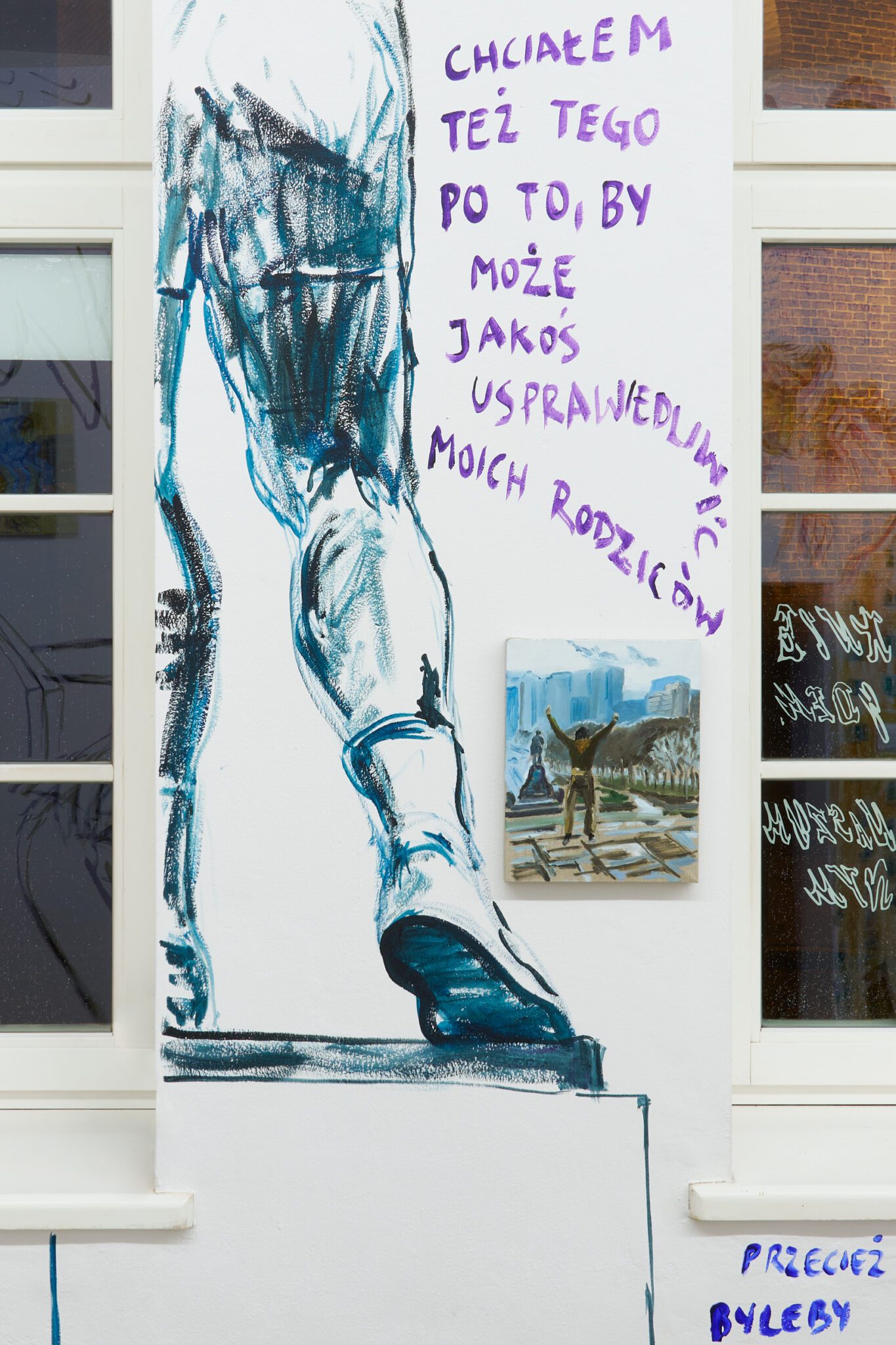
In recent years, Patryk Różycki has notably started to achieve some of his dreams – of recognition, of financial stability, of crossing the boundaries of class and status that he had been born into. Growing up poor in a village in central Poland, Patryk recalls a lot of memories of wanting to be somebody – a soccer player or maybe an artist. Of wanting to be acknowledged, to have a monument in the village built in his name, like Rocky Balboa. But once this finally started to happen what he didn’t anticipate was the loneliness; the gap that this would reveal, the feelings of betrayal it would inspire and the destabilization of many of the most significant familial and friend relationships in his life.
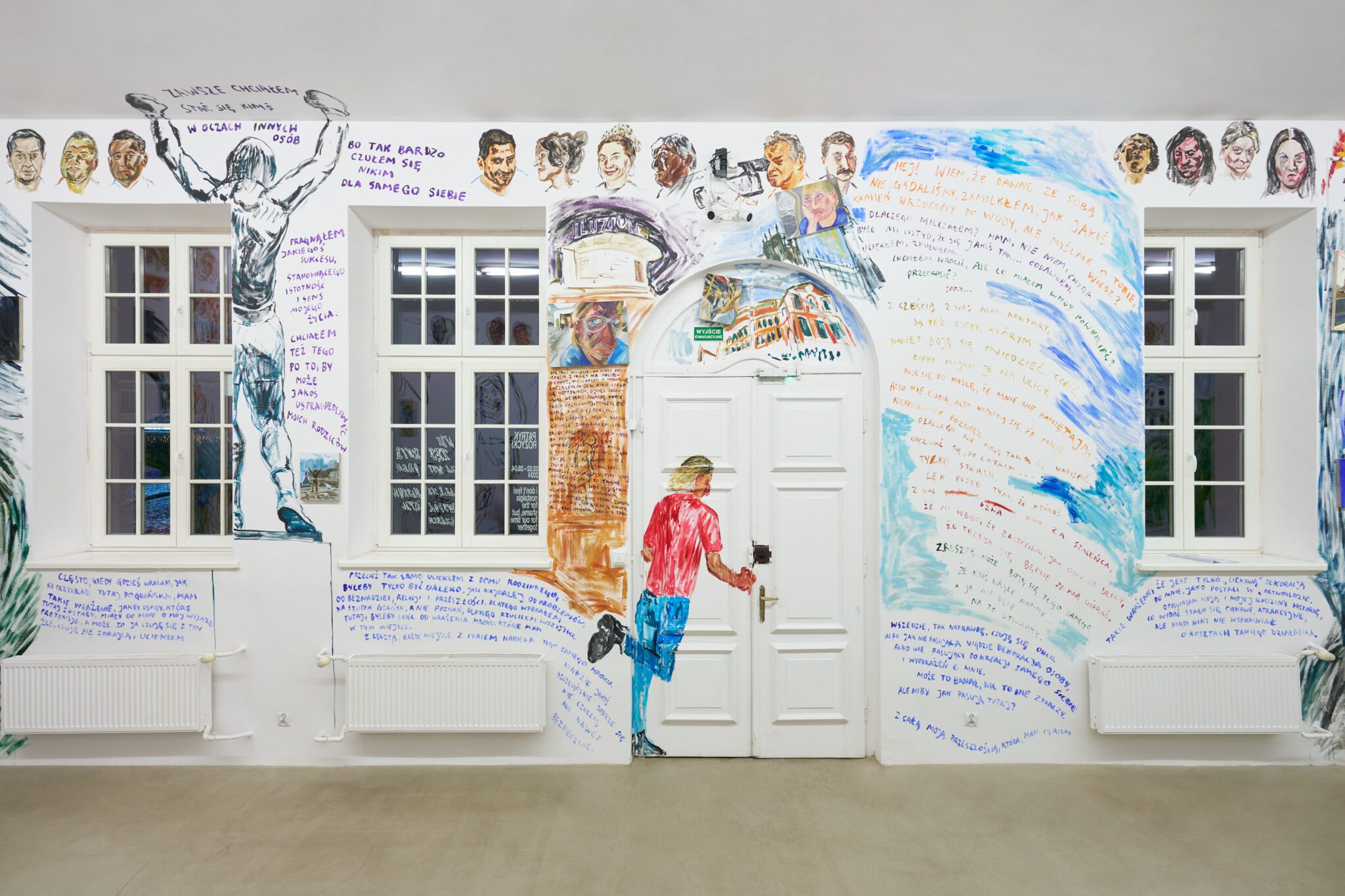
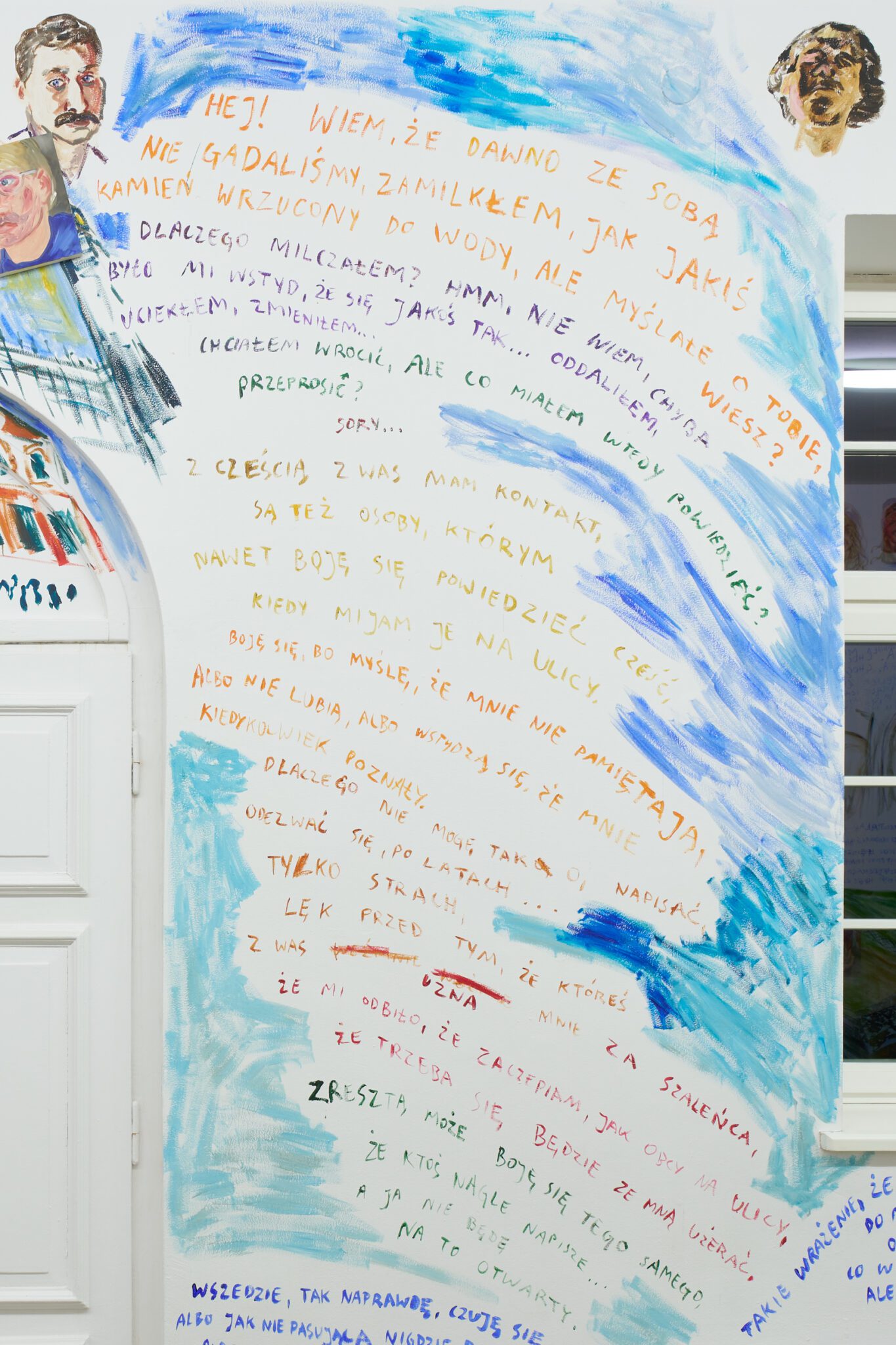
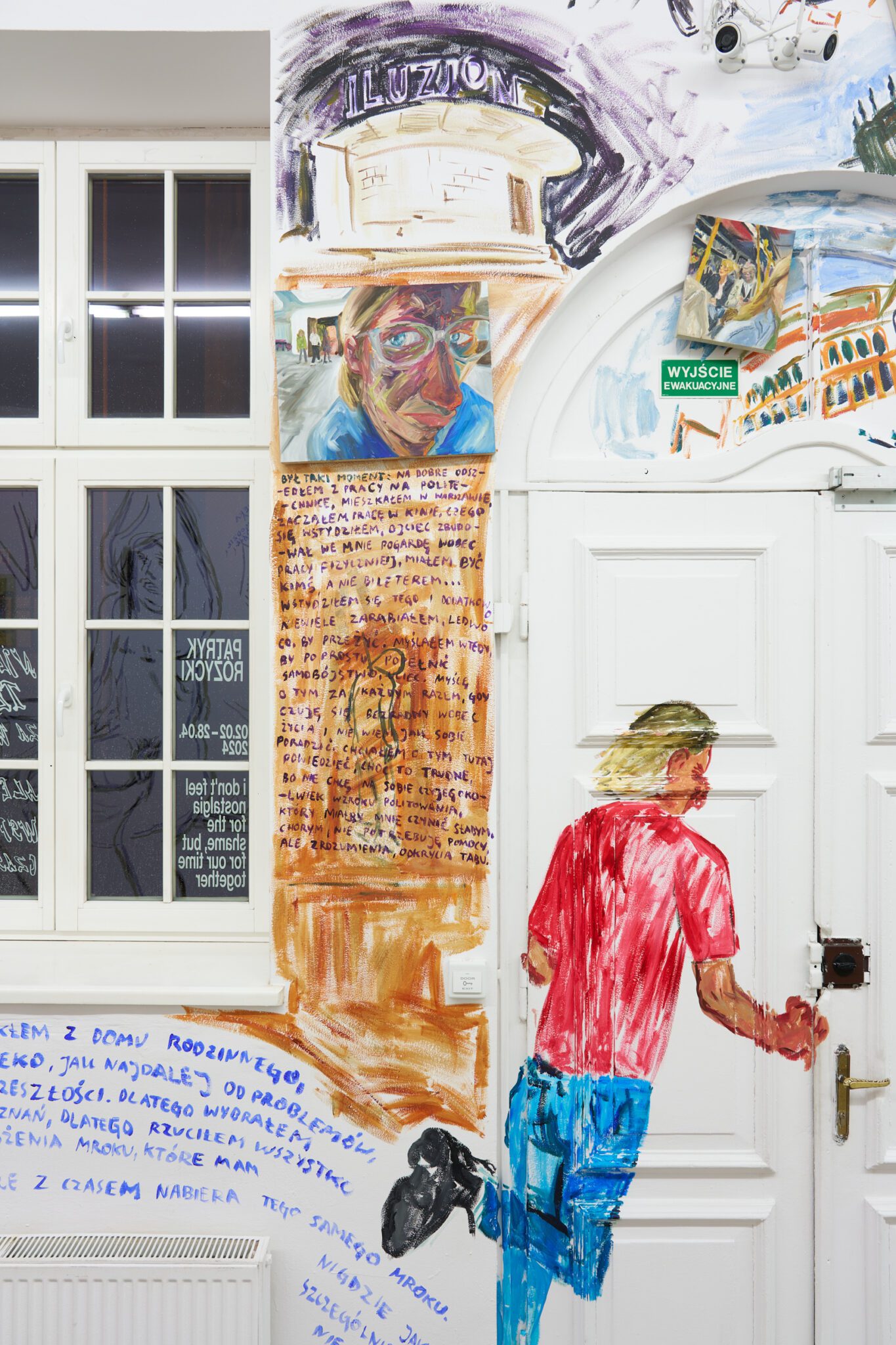
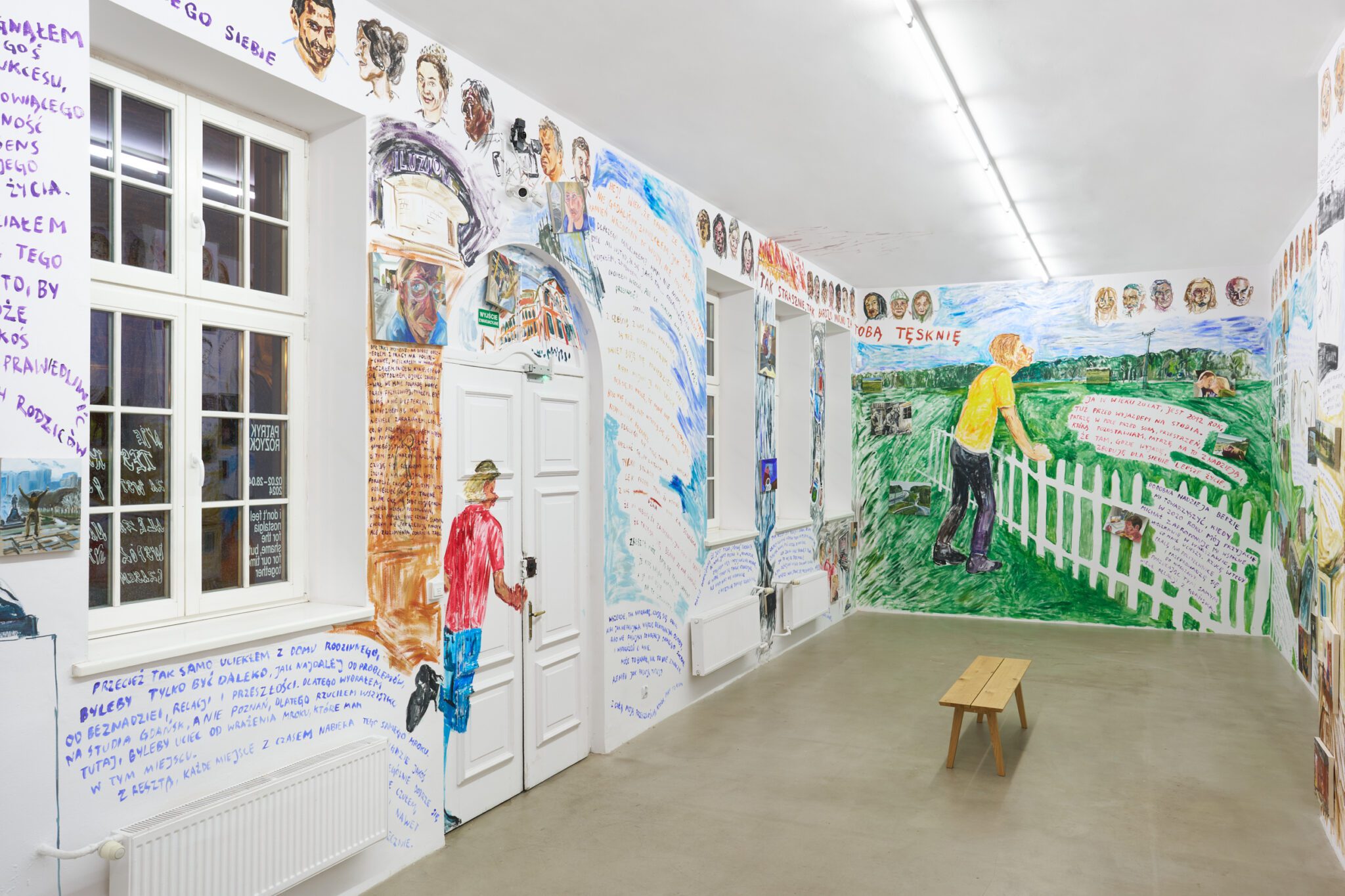
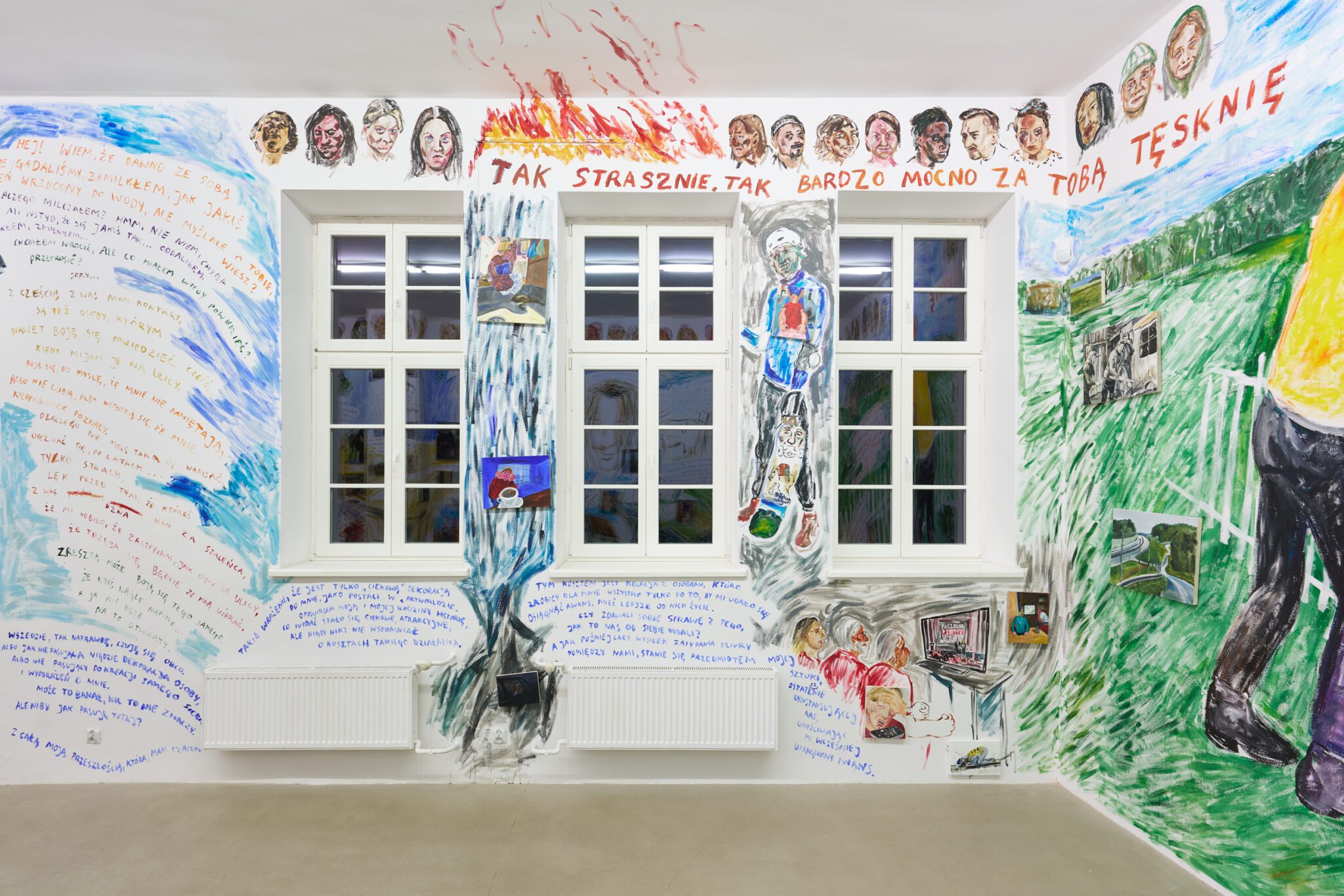
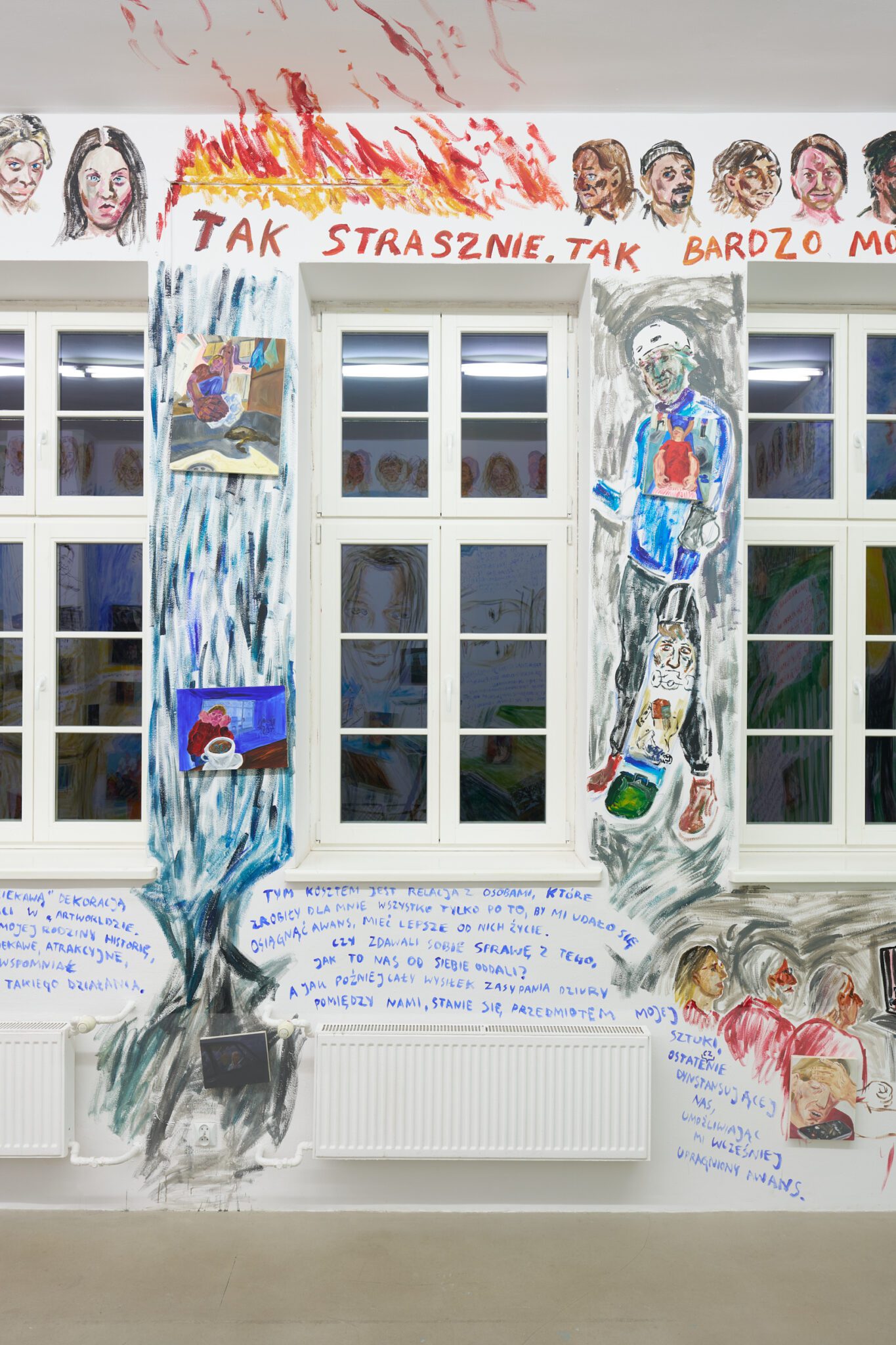
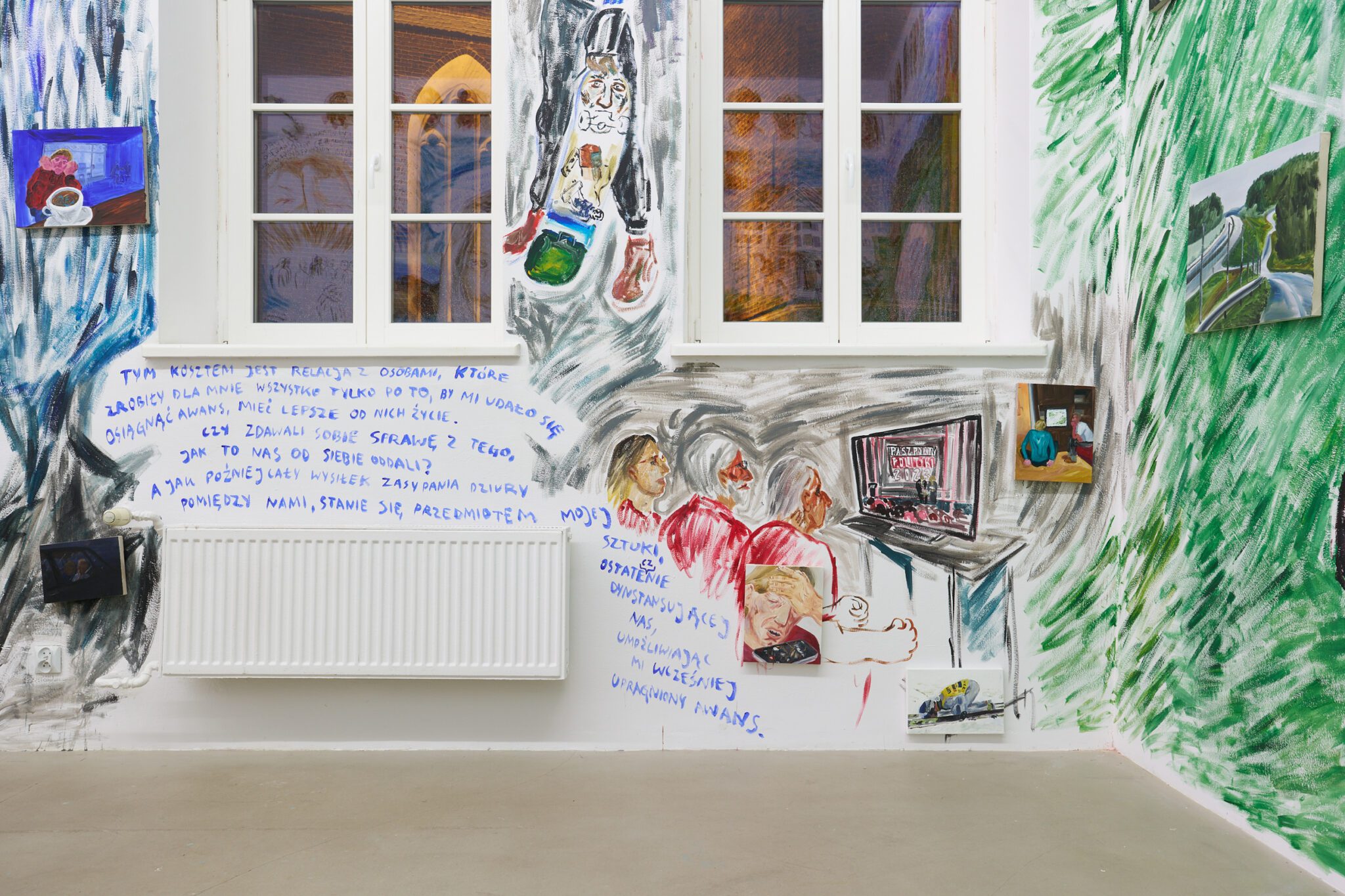
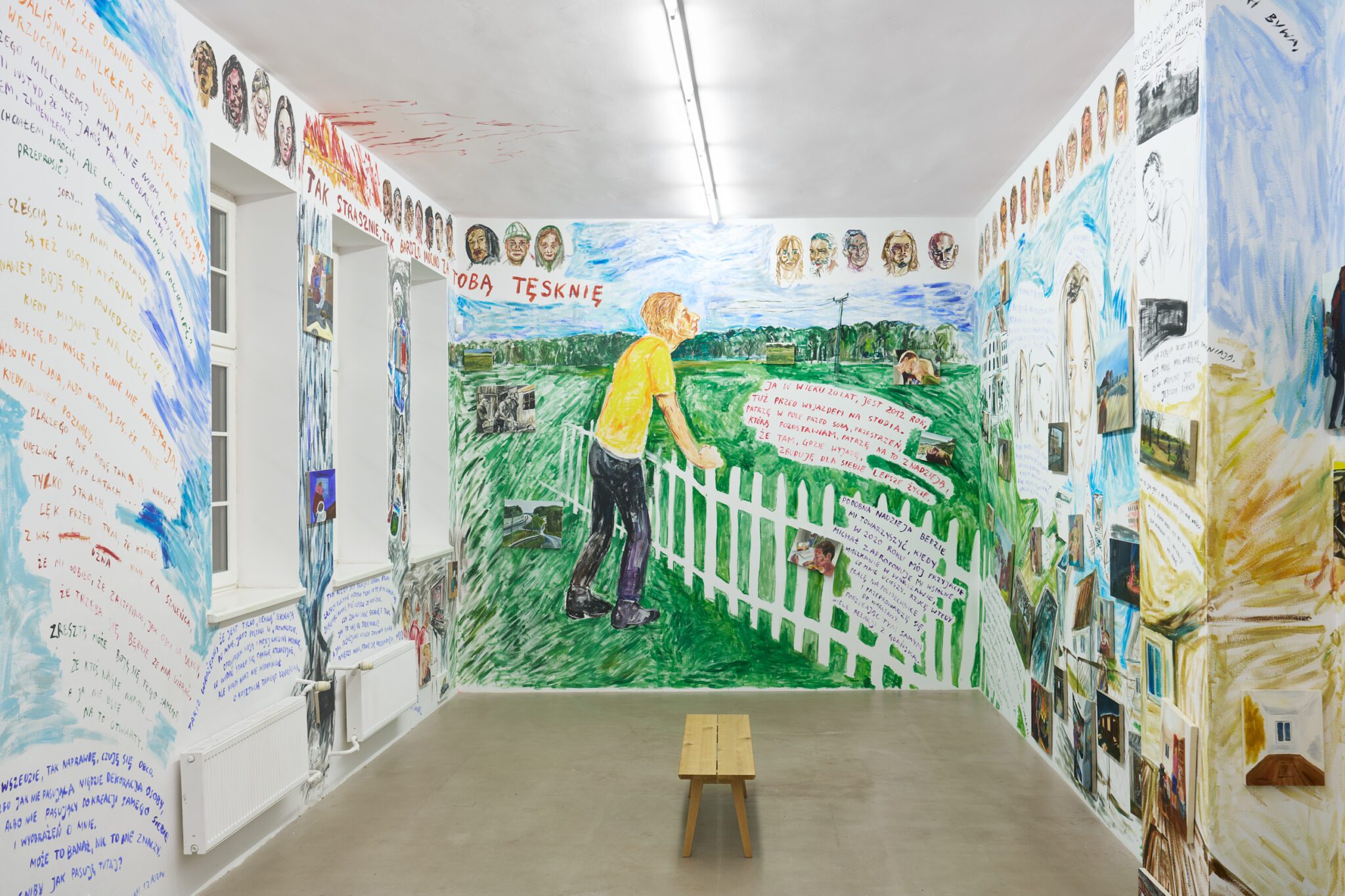
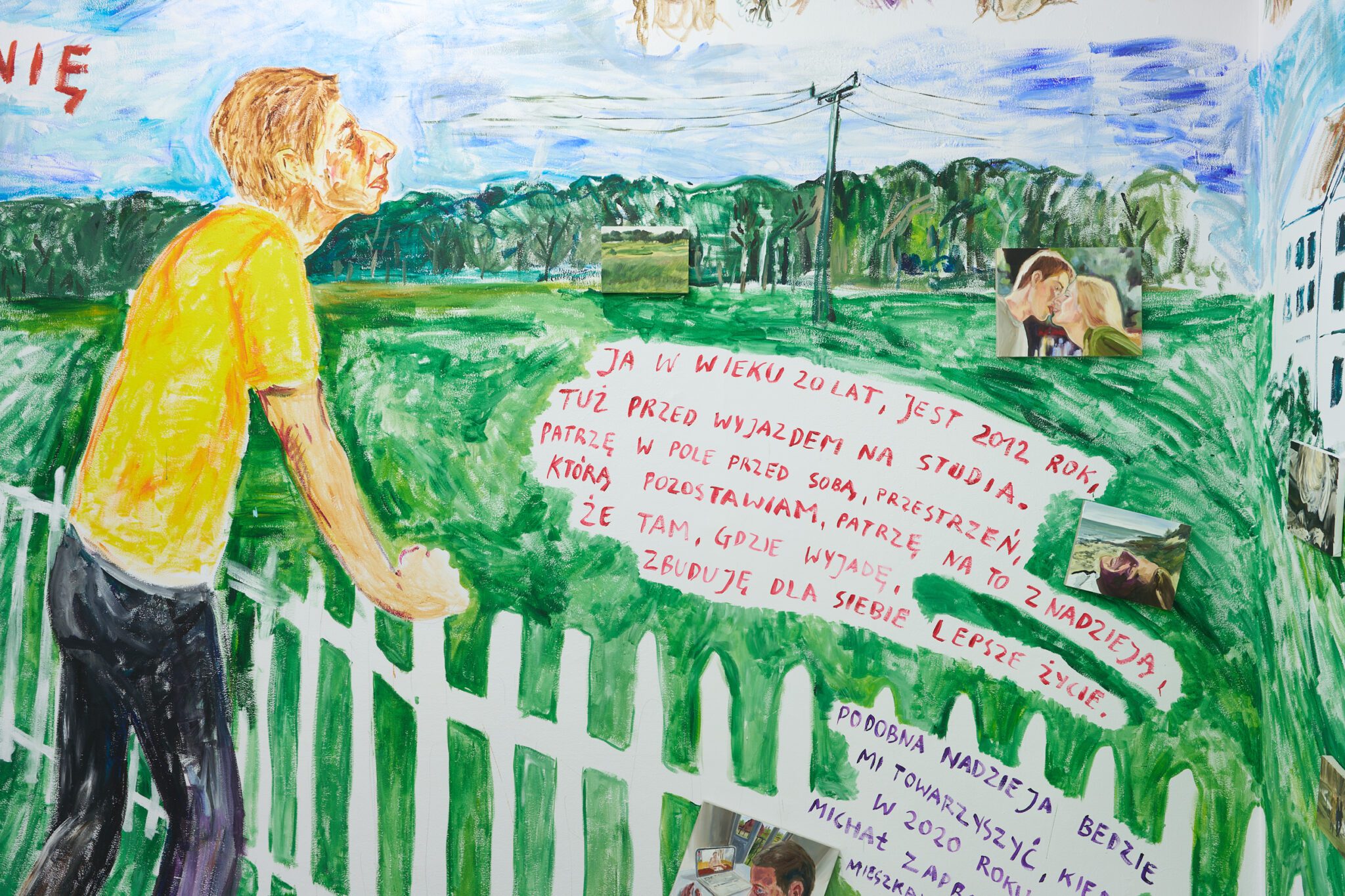
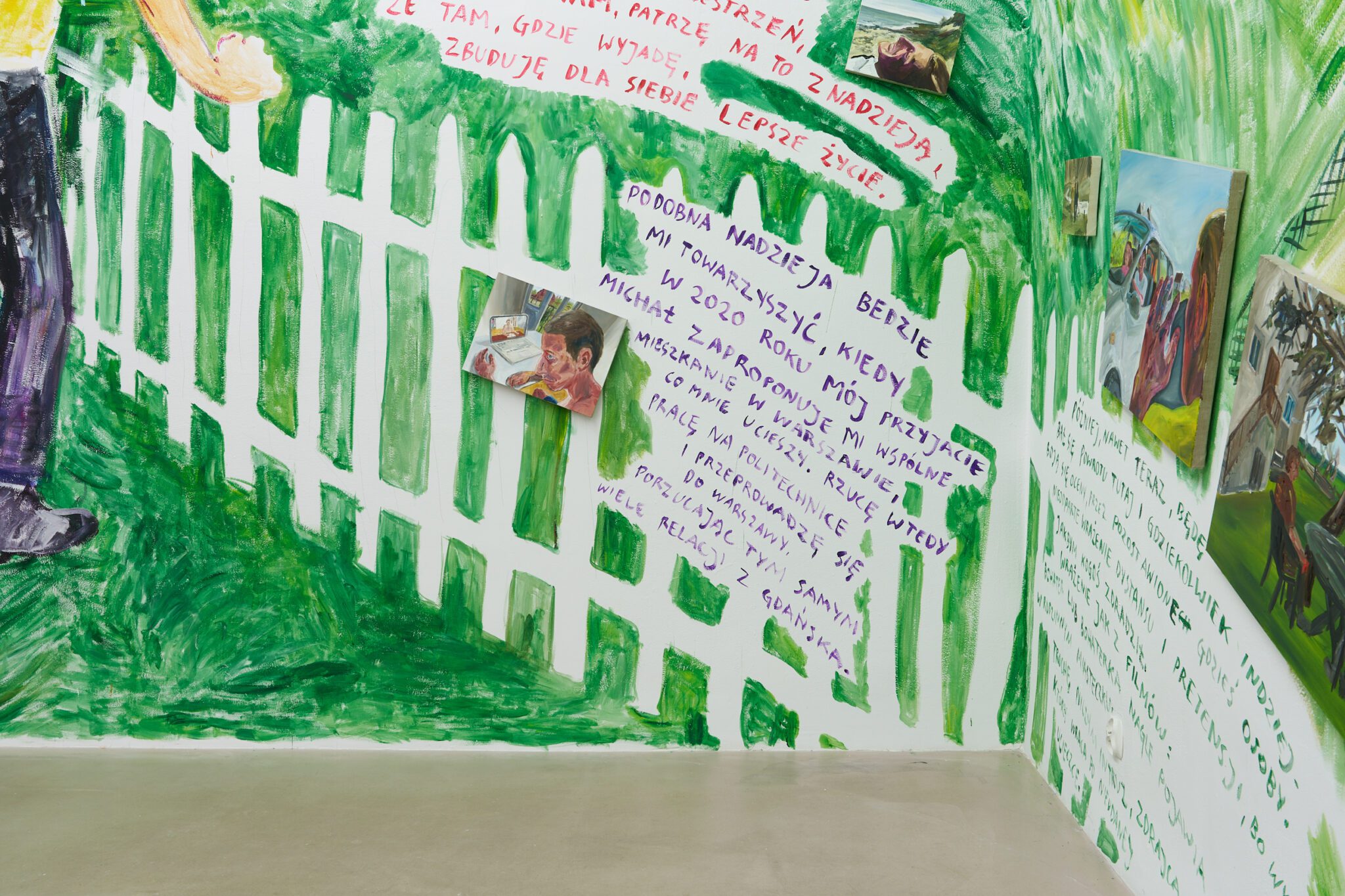
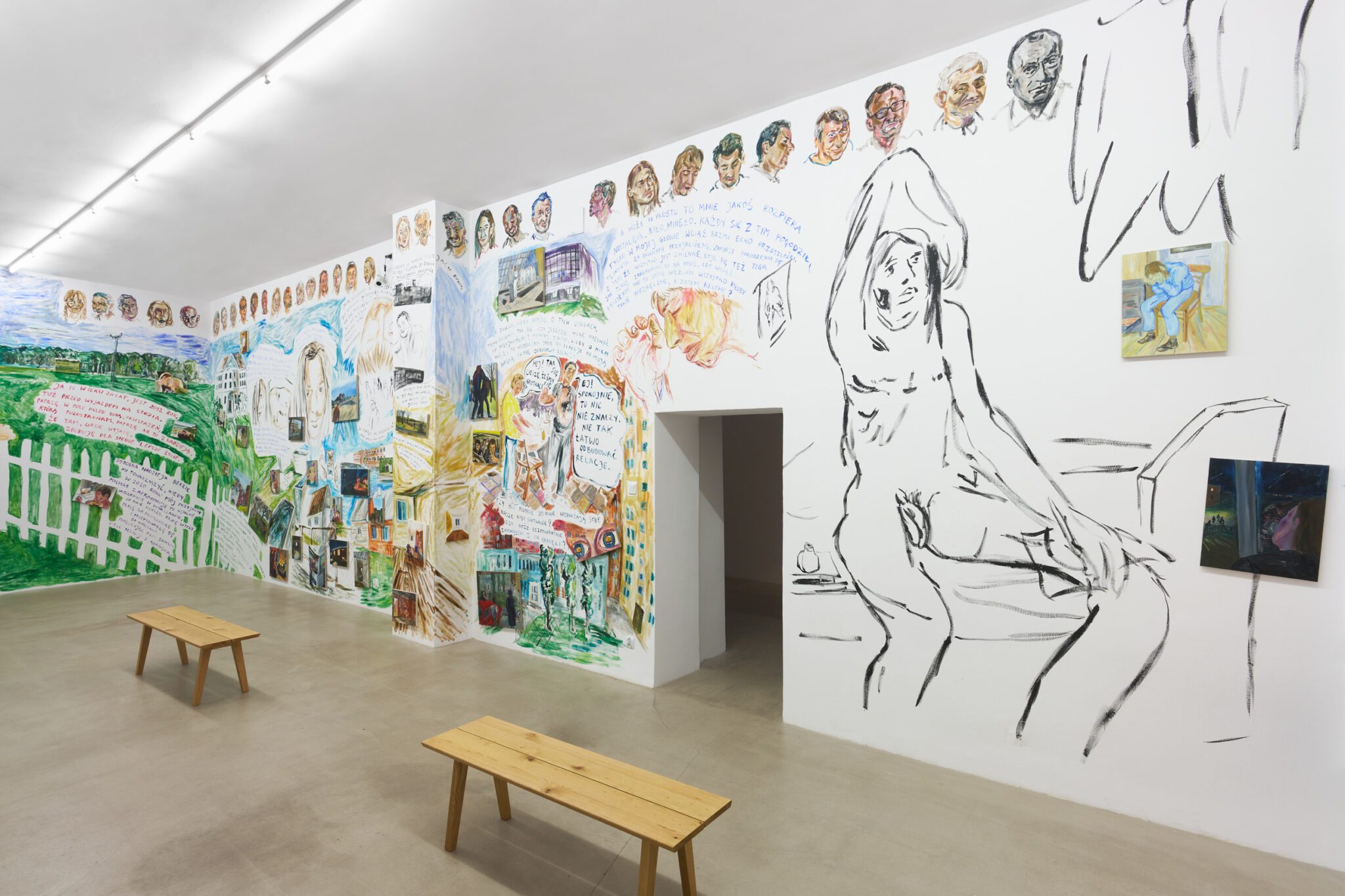
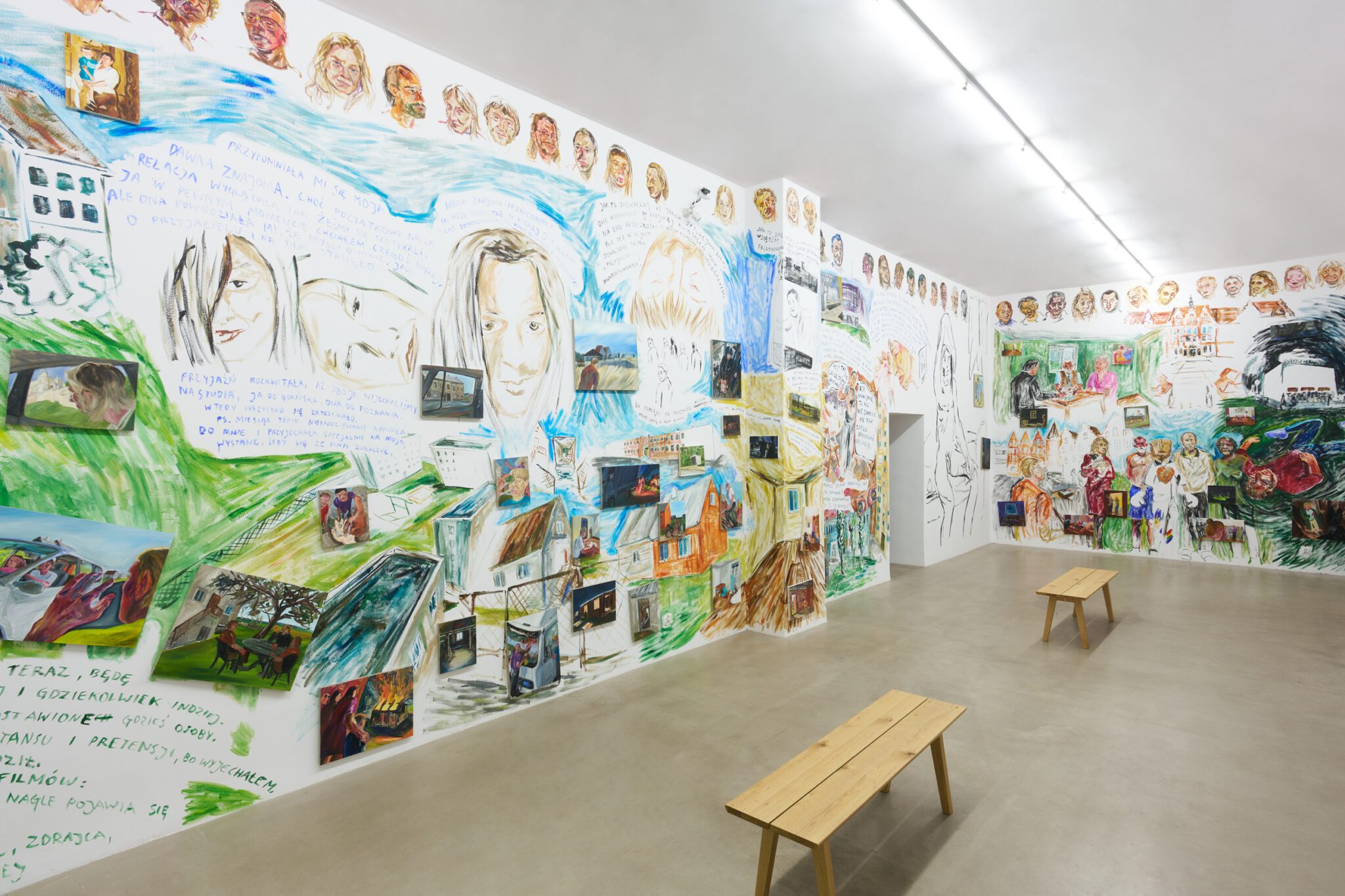
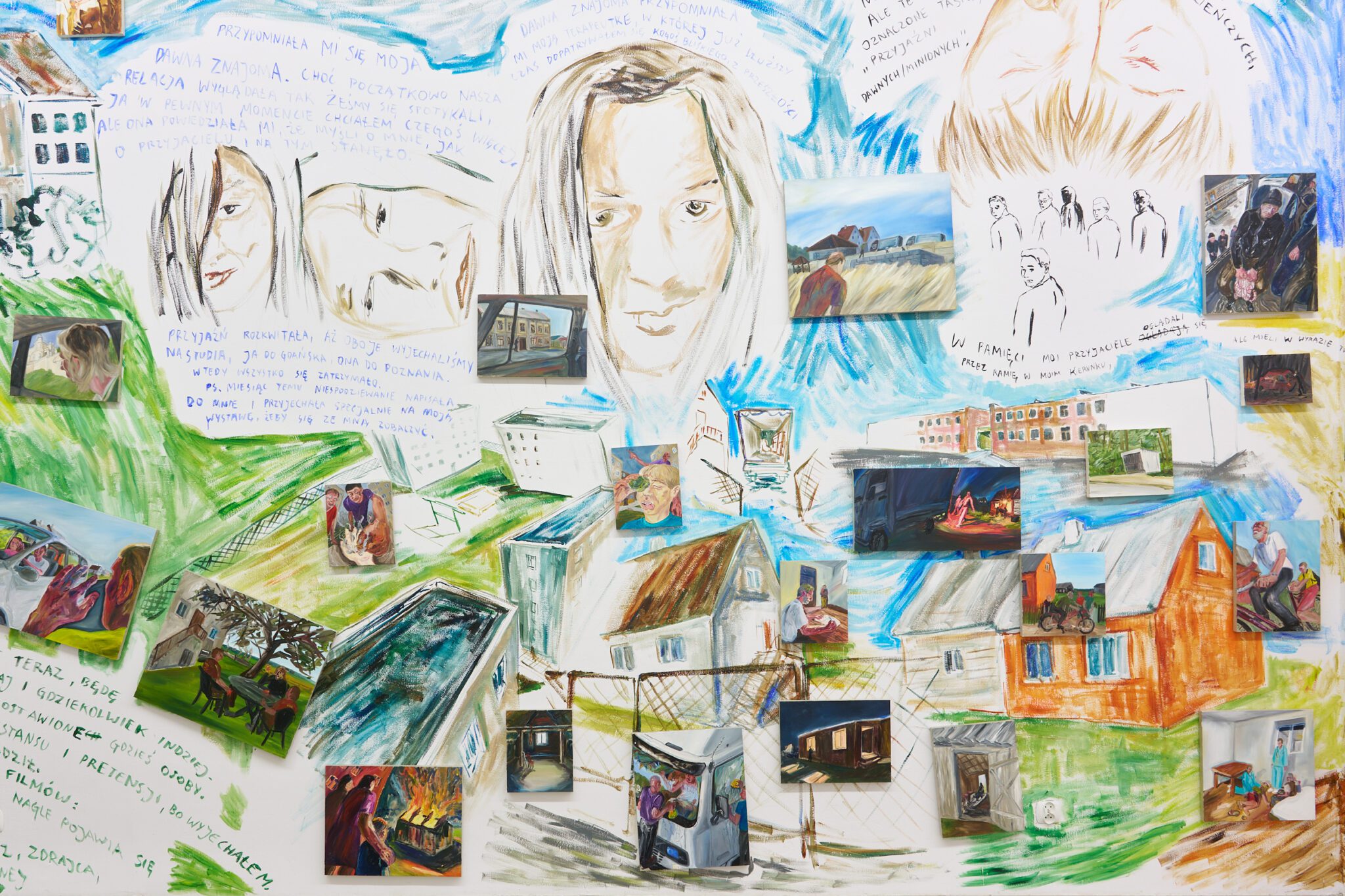
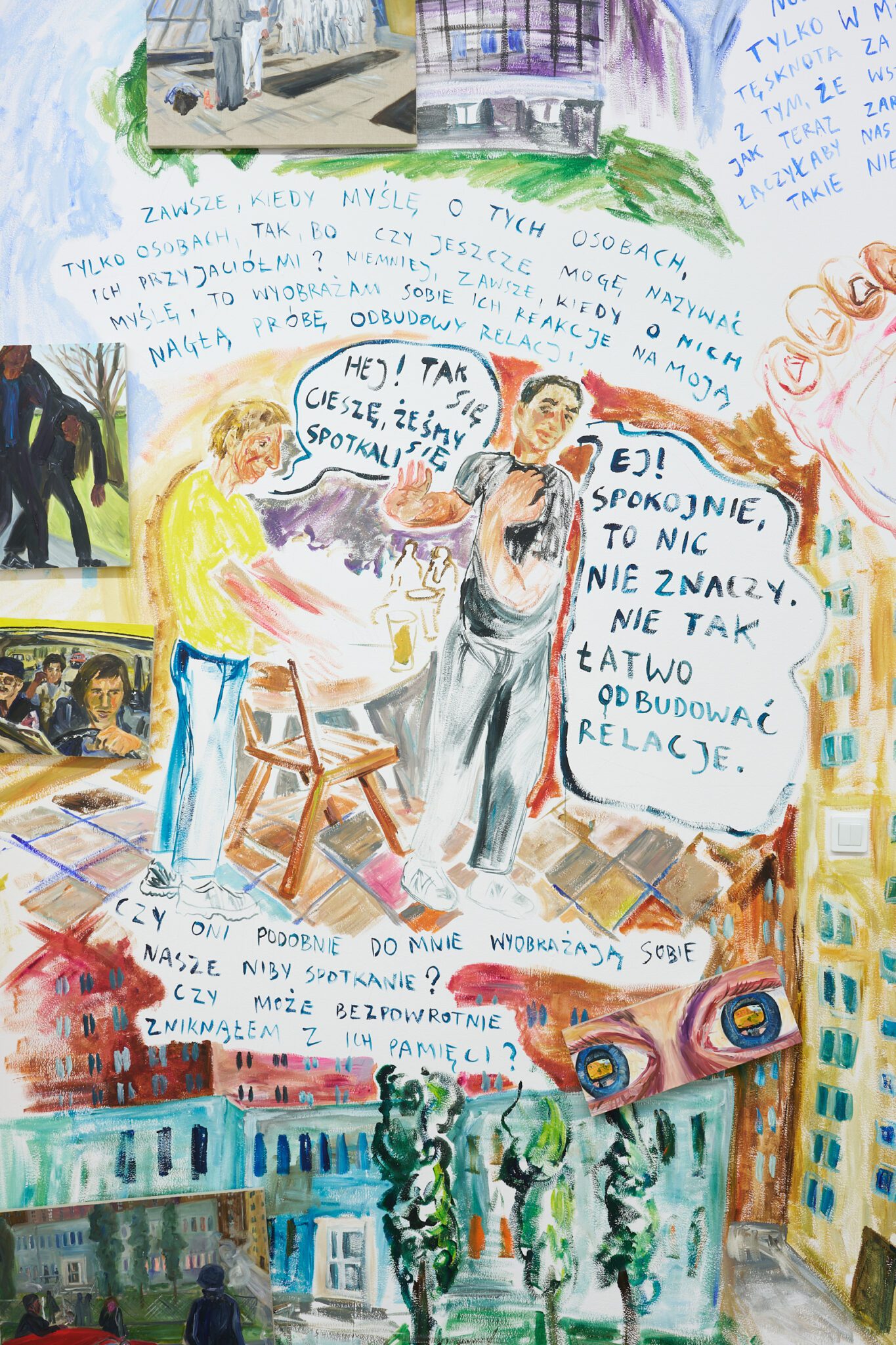
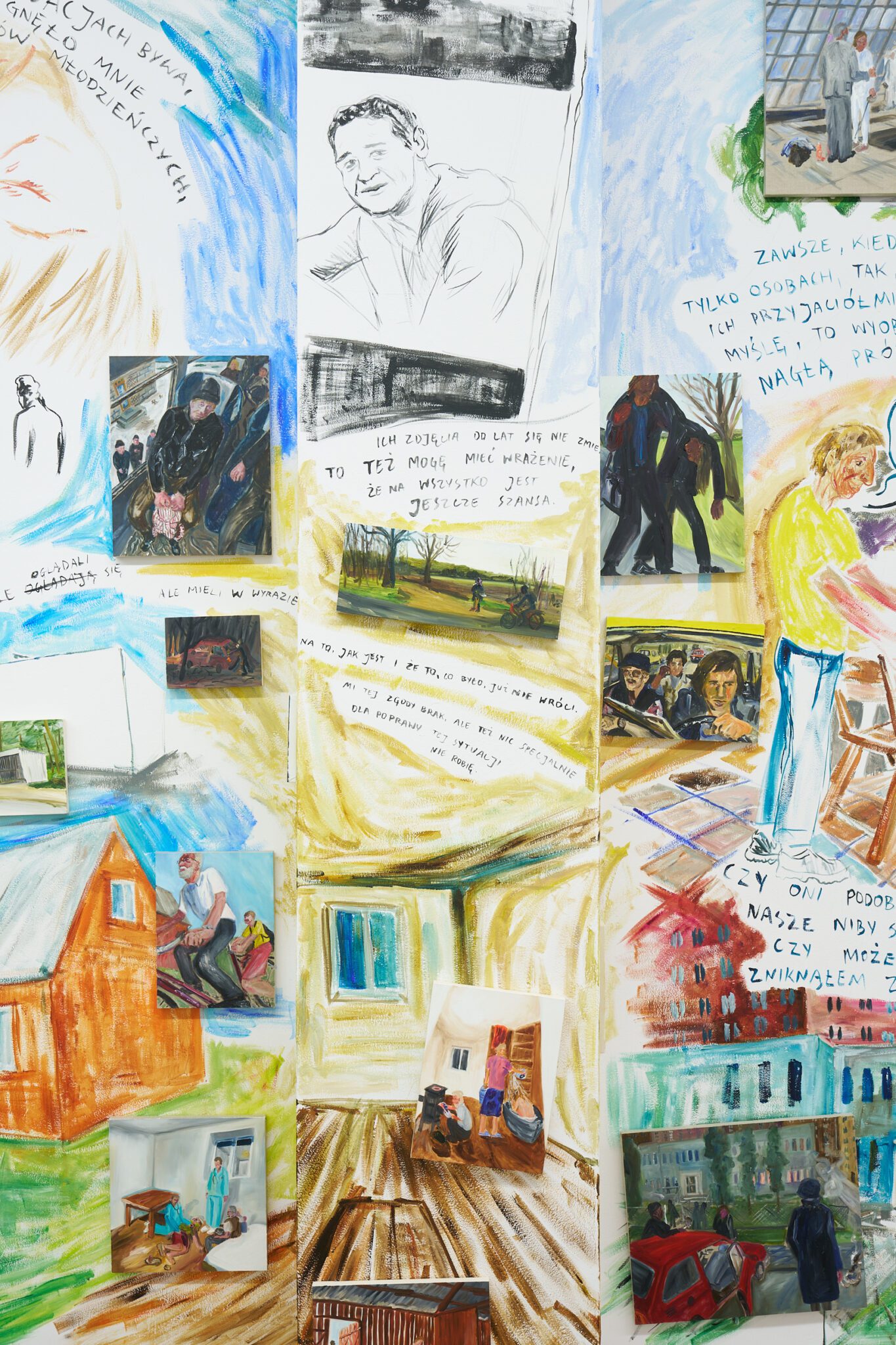
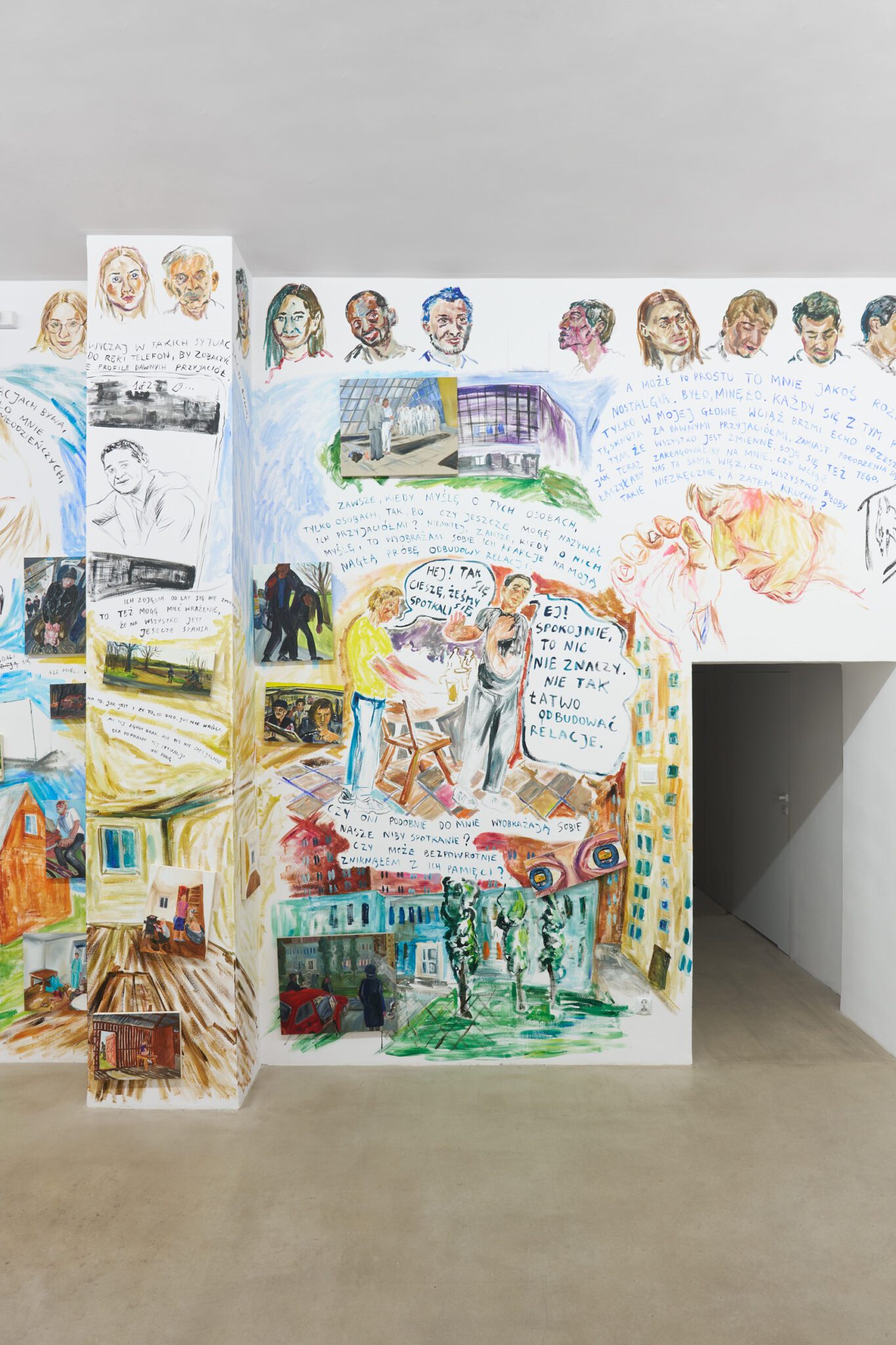
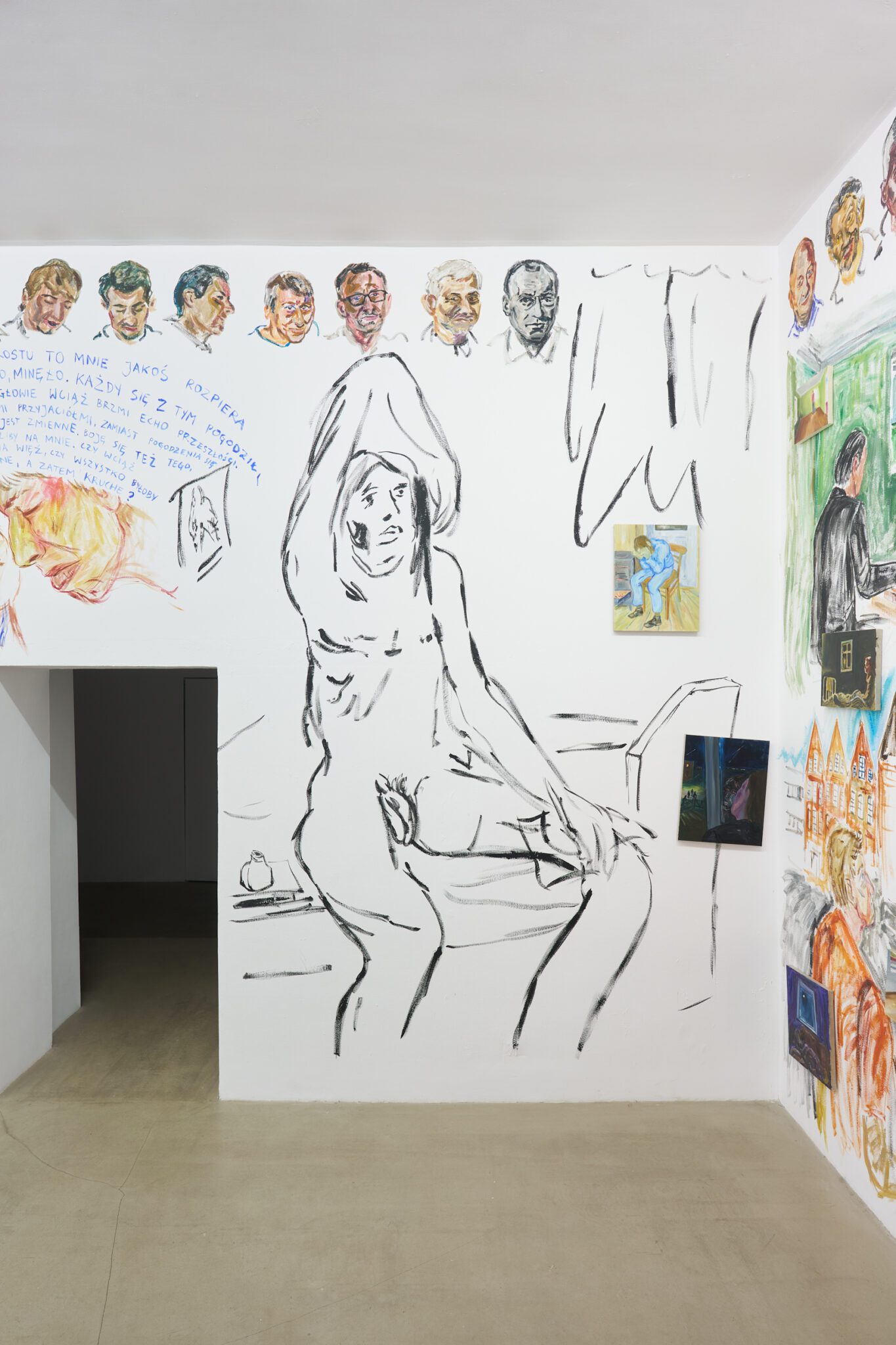
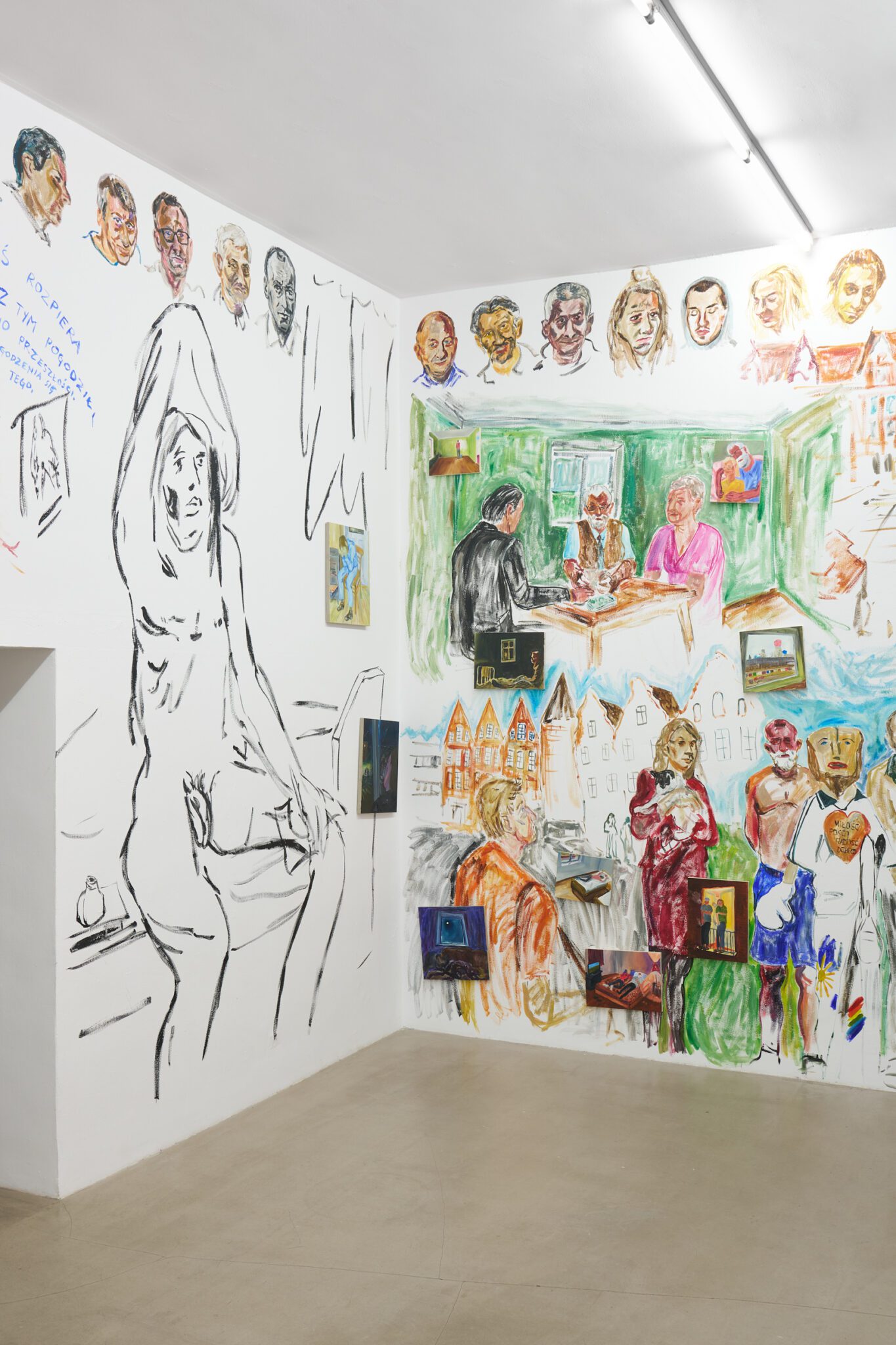
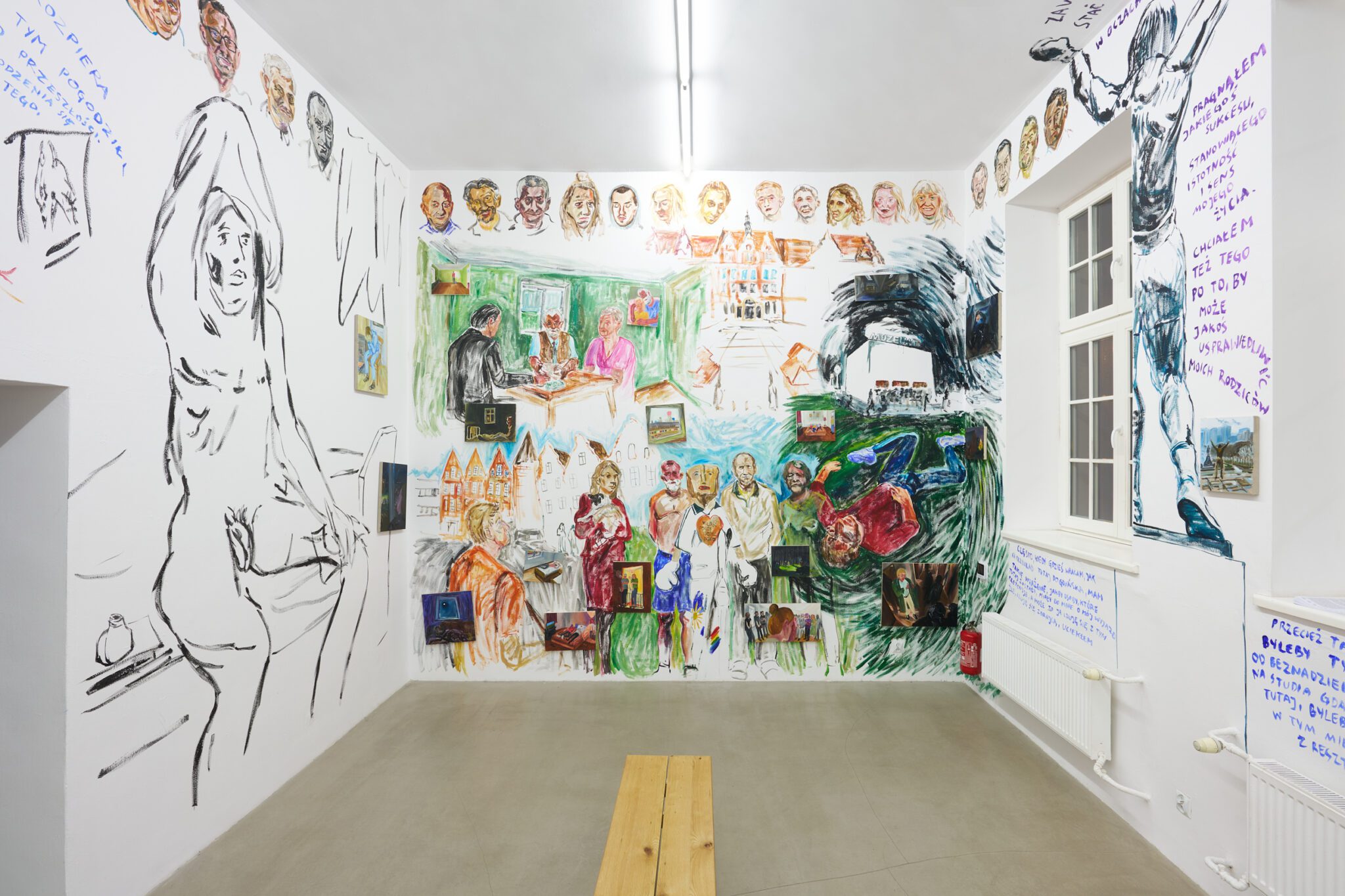
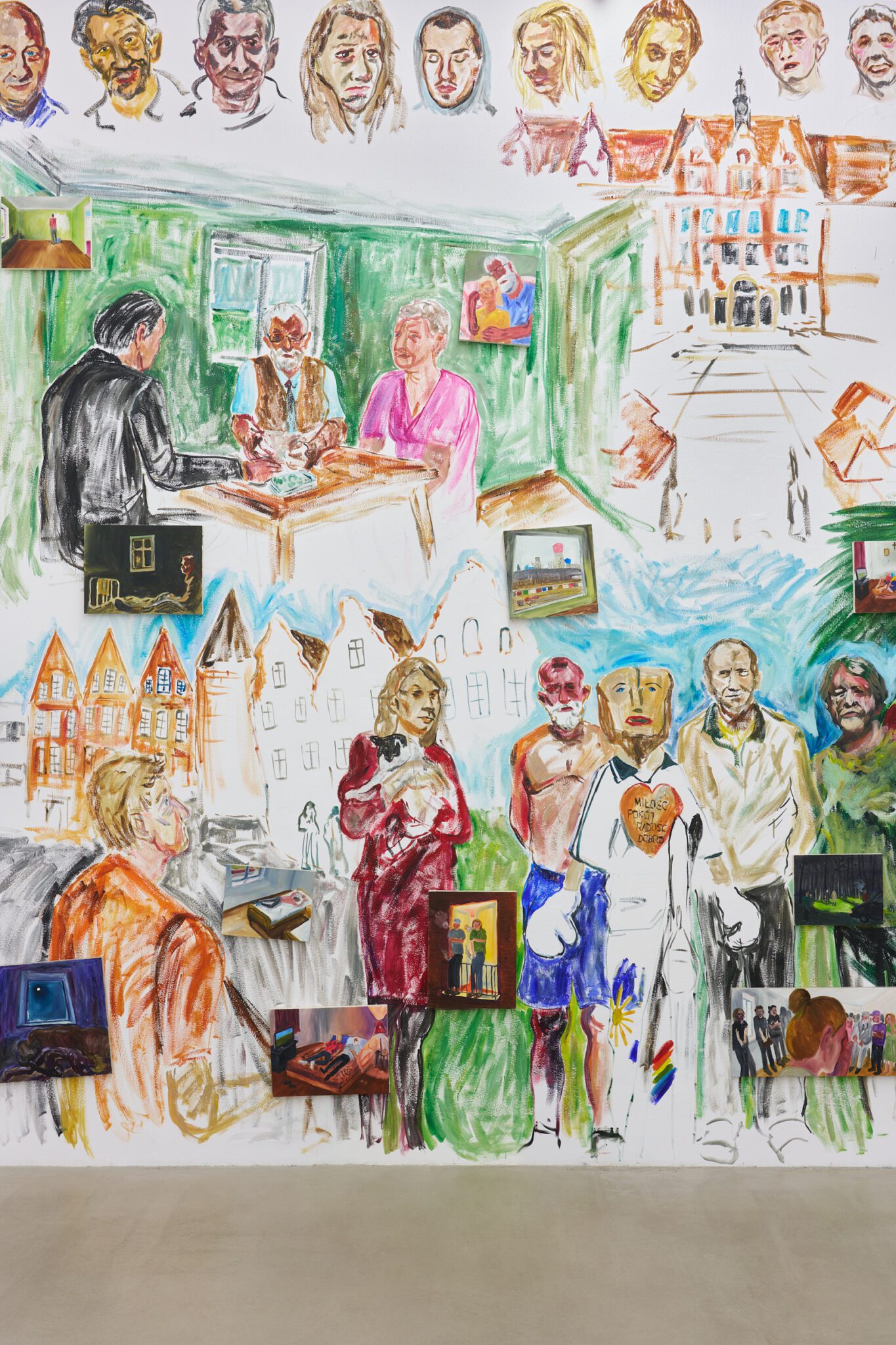
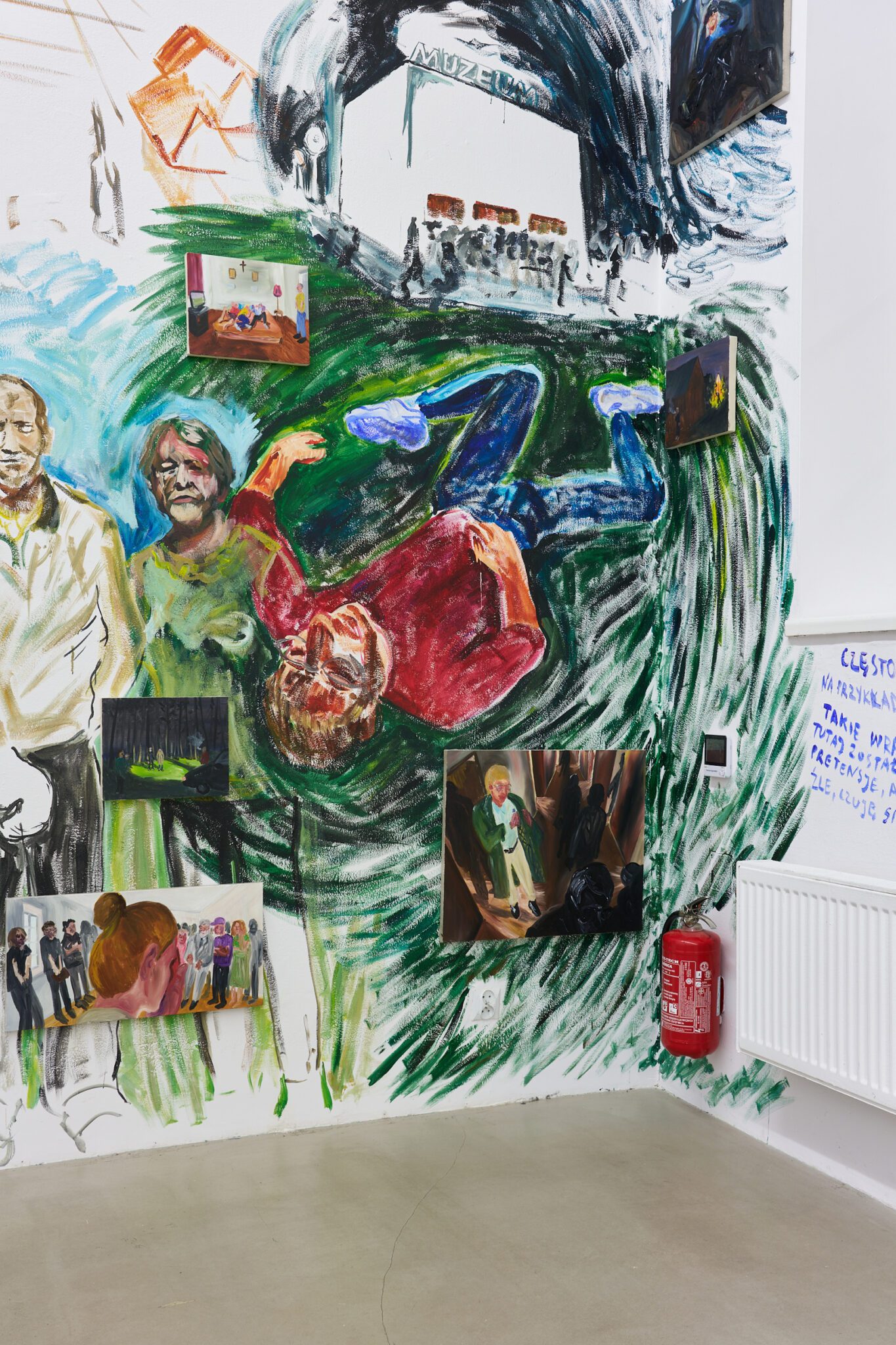
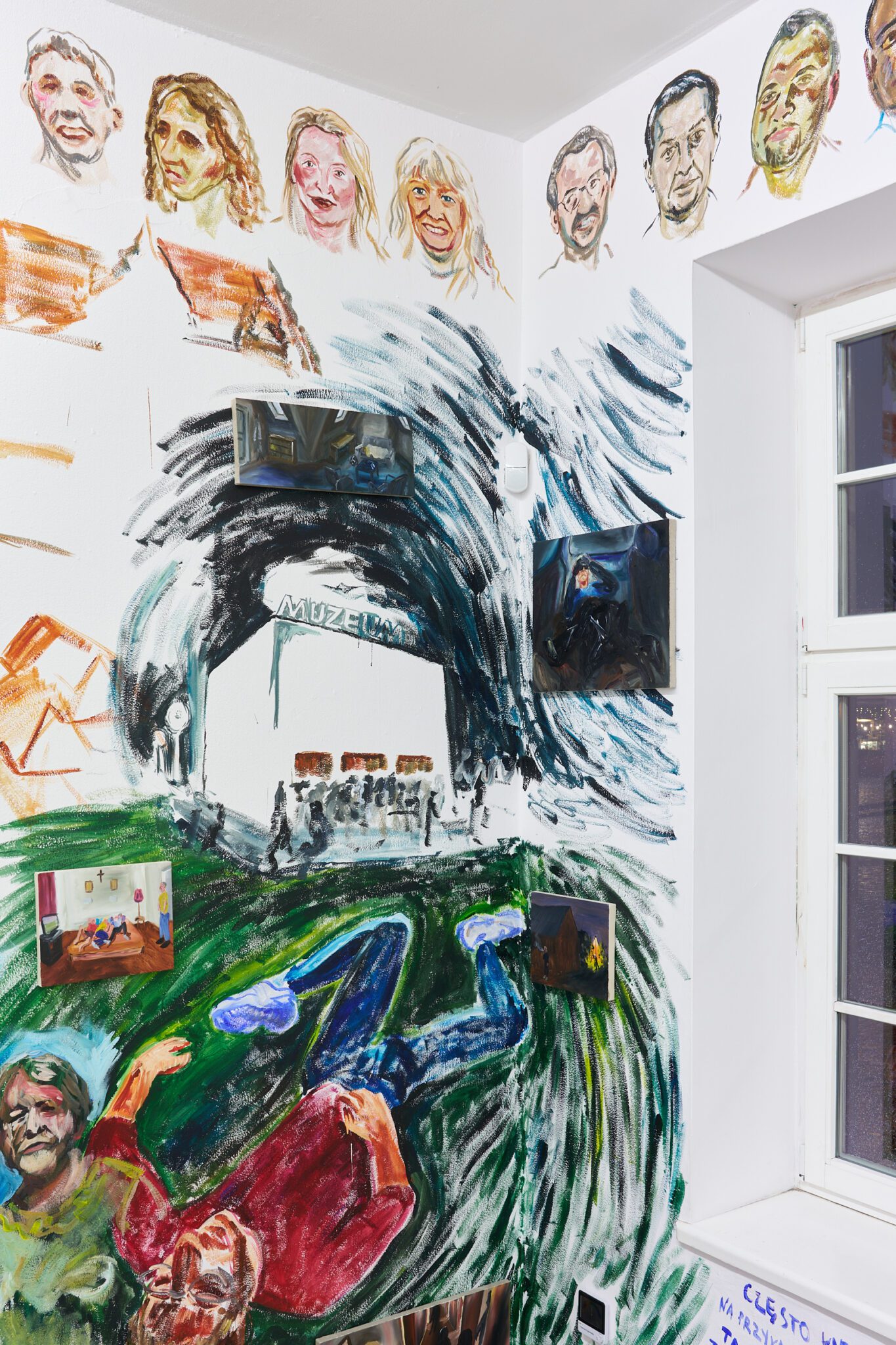
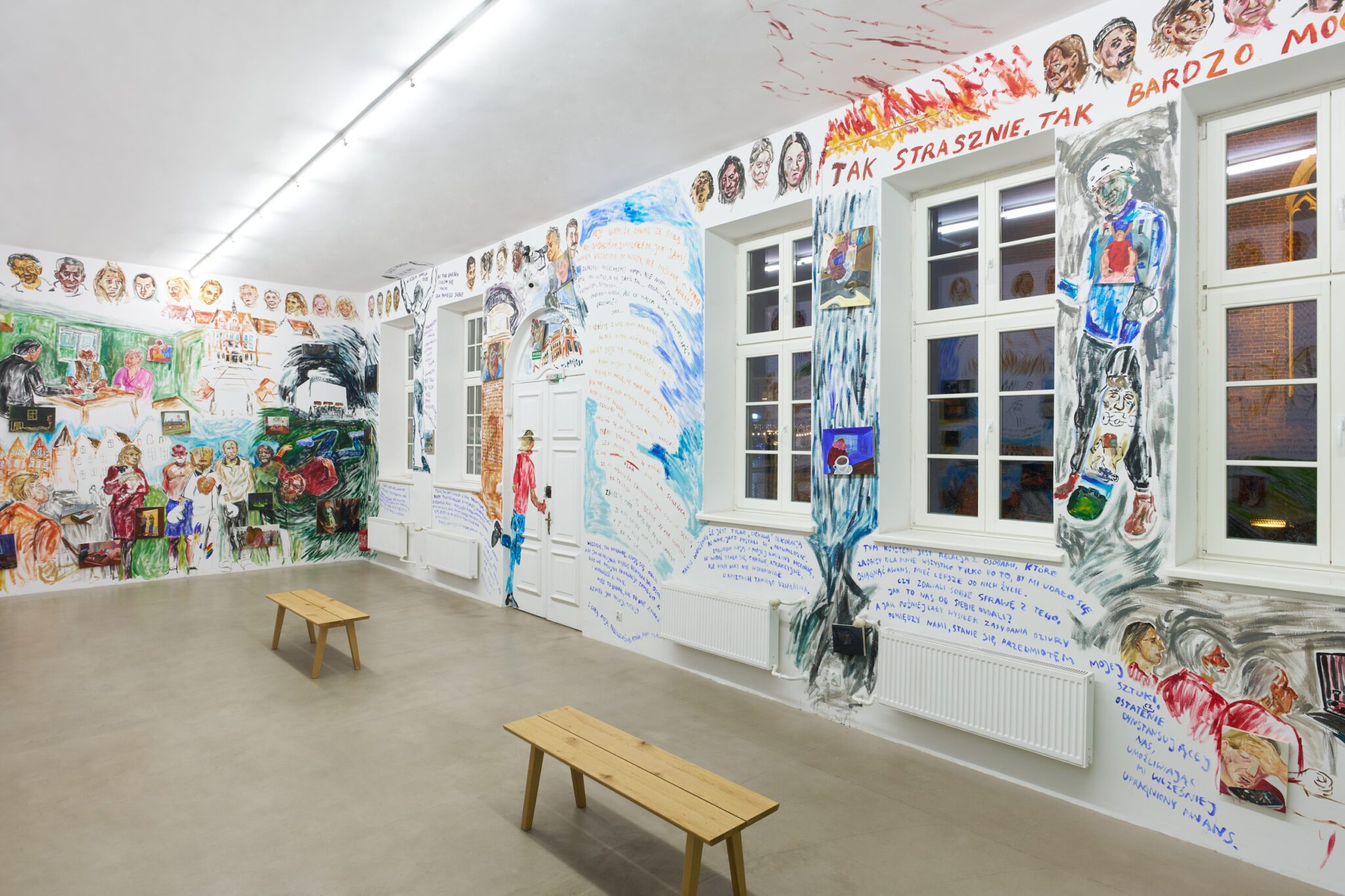
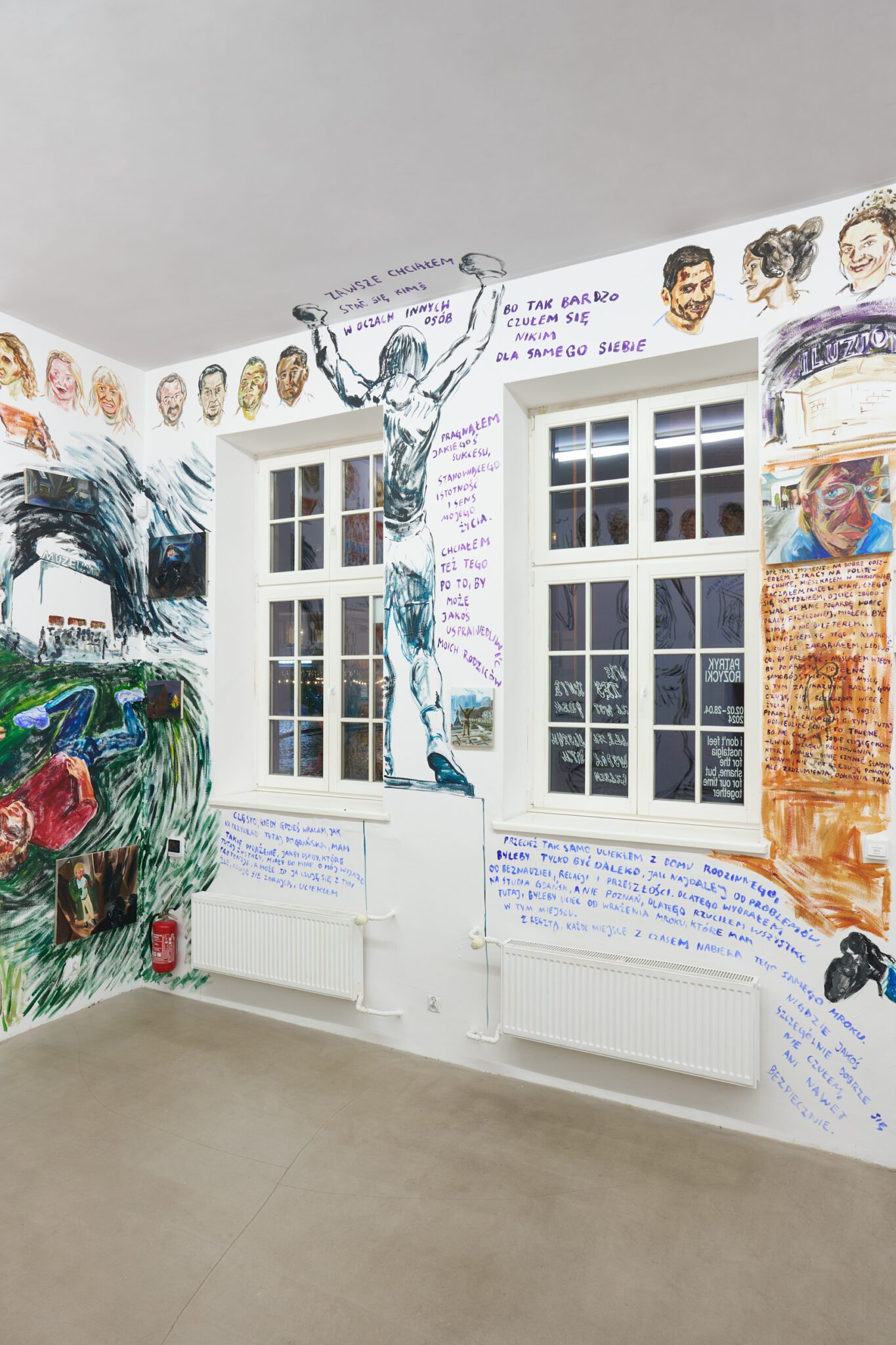
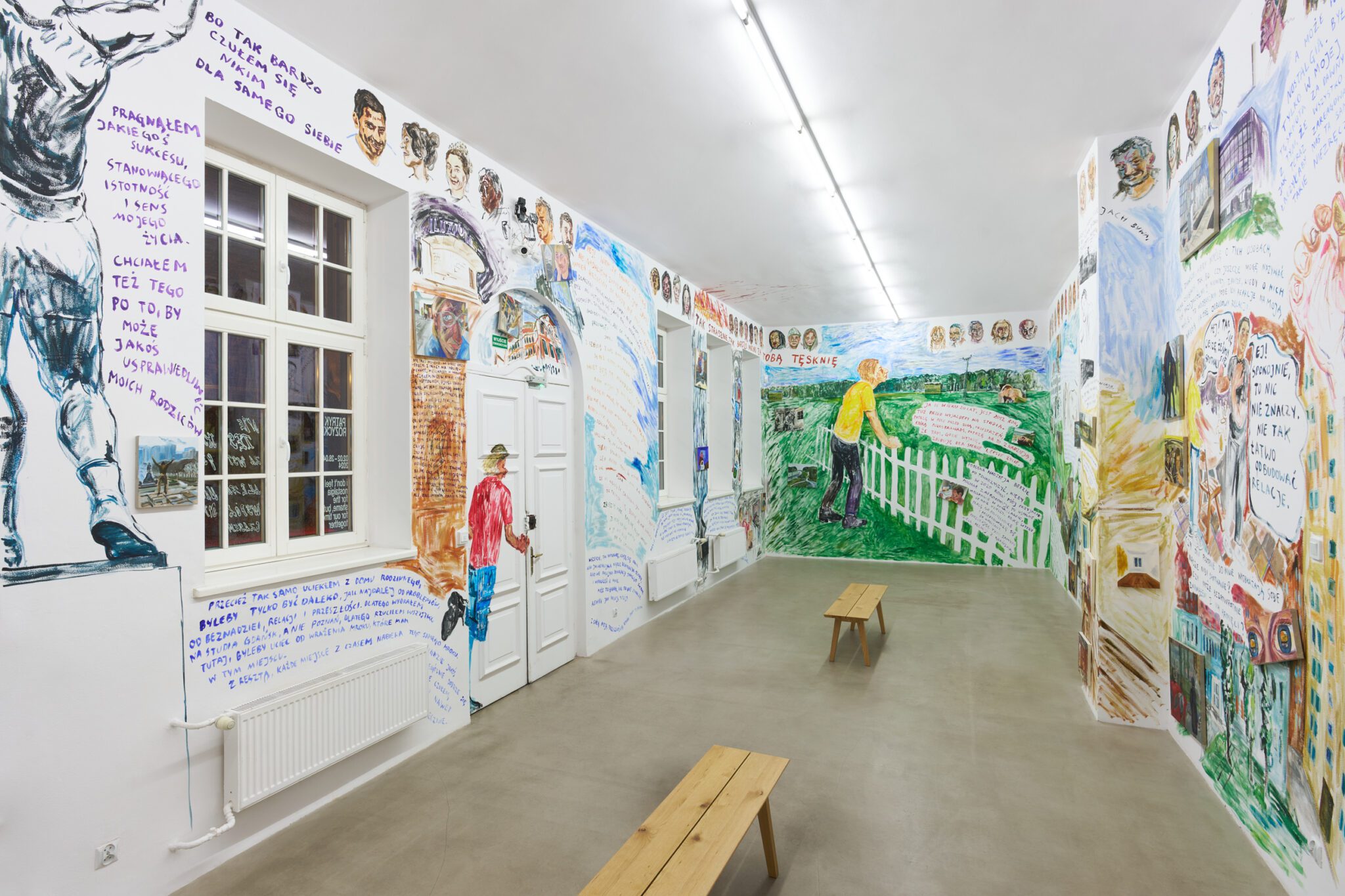
I don’t feel nostalgia for the shame, but for our time together presents an installation composed of mural-style wall paintings and paintings on canvas that work synchronously to tell Patryk’s stories of kinship, of isolation, of shame, of class and privilege and transition. Guiding us through his memories, mapped across time and place, this exhibition serves as an homage; a love letter of sorts or maybe even an apology, to those who he has kept with him despite the separation, be it through season or status.
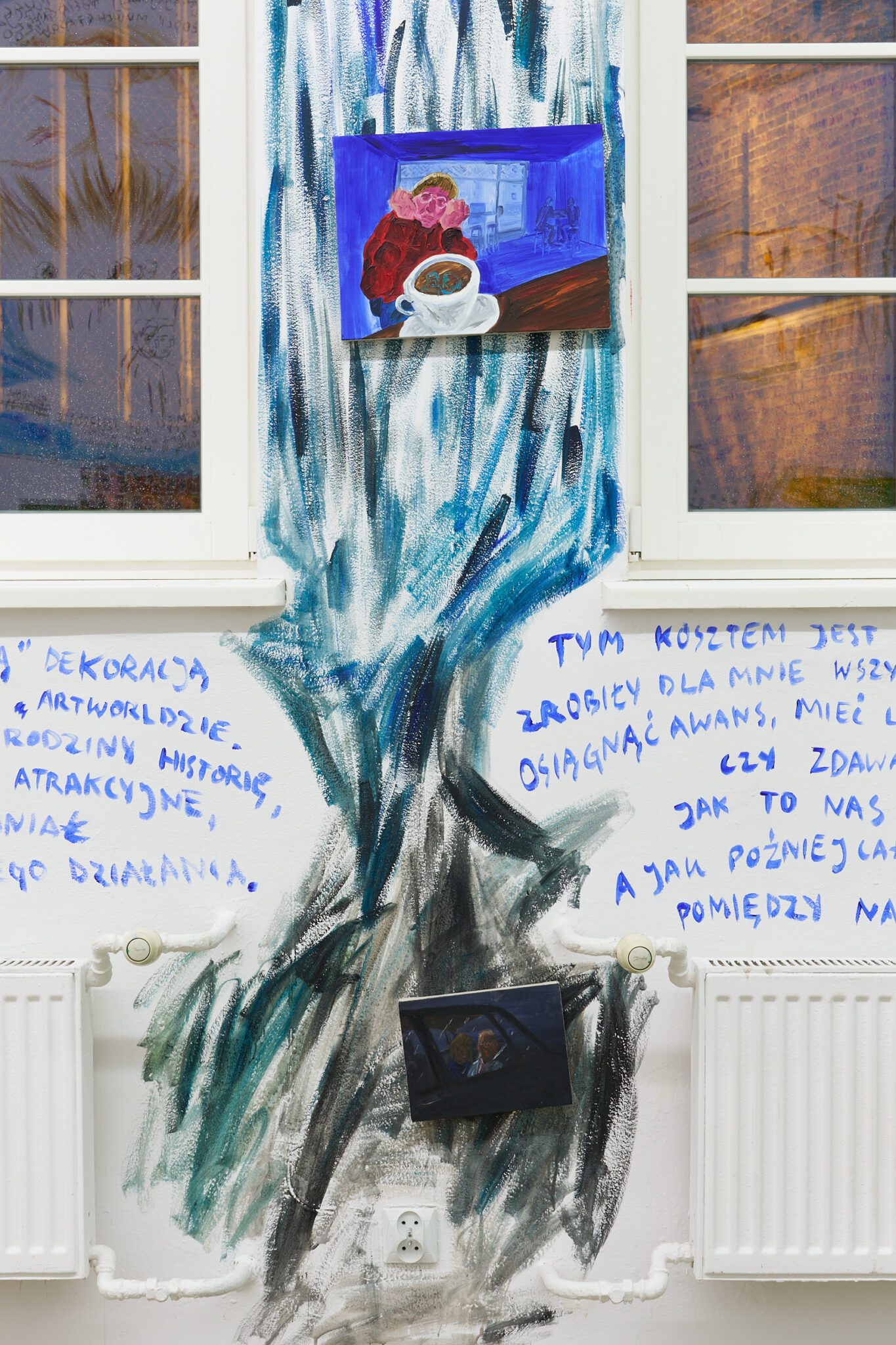
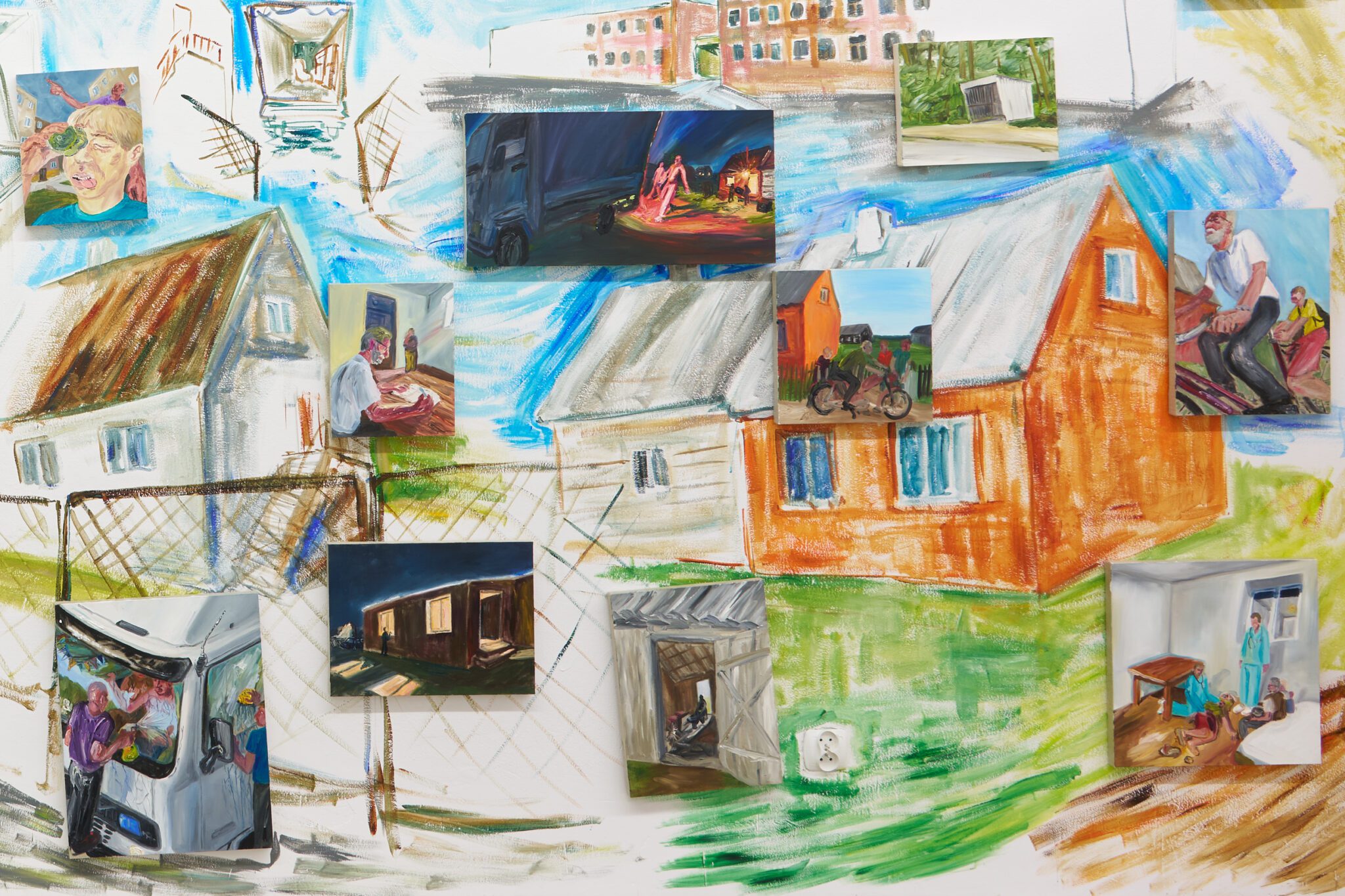
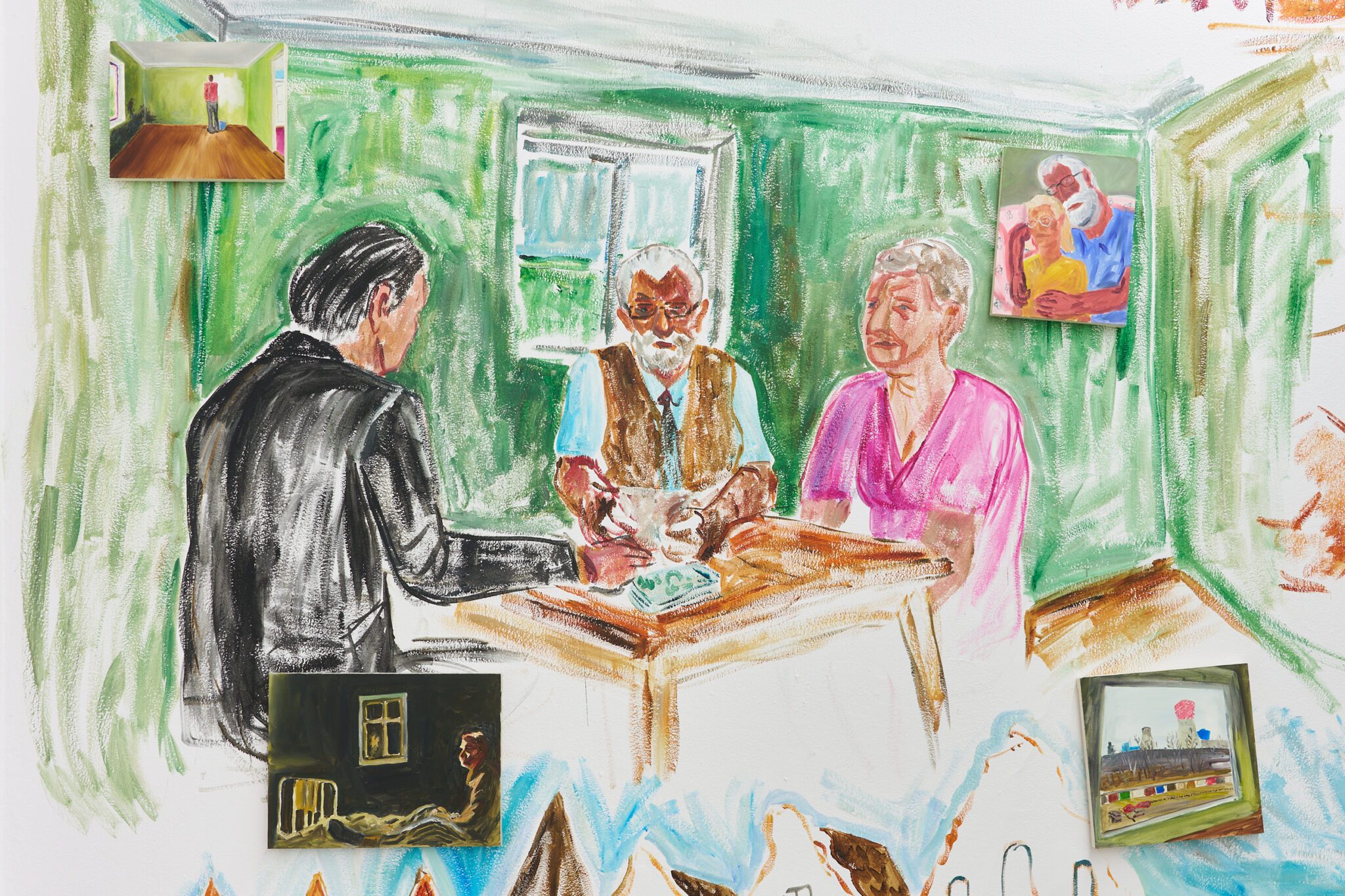
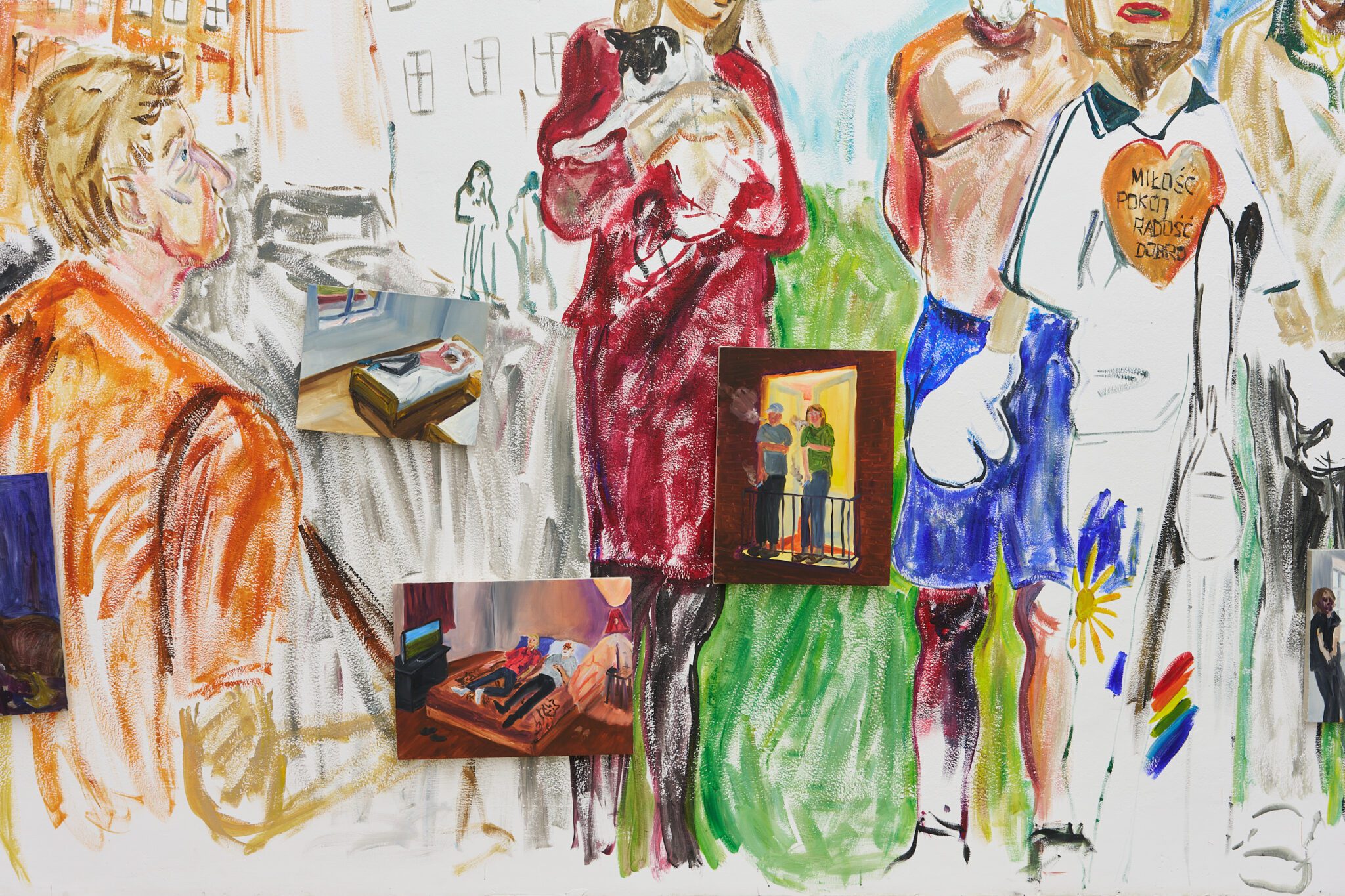
While Patryk is known for the confessional nature of his subject matter – painted images of personally experienced or witnessed moments of pain, awkwardness, vulnerability, intimacy, devotion, death – for this exhibition he takes a new formal approach. His memories are painted alongside dreams; real-life shame woven with fantasy, waking moments and scenes from films appearing on canvases slightly smaller than he conventionally paints. These elements introduce a relation to photography, and overlap large-scale mural-style paintings that cover the walls and extend to the ceiling of the gallery. In contrast to Patryk’s typical approach, this more immersive, installation-based format follows a lineage more closely associated with Mexican muralism and the early-mid 20th c. North American revitalization of fresco painting, both developed as didactic political tools for making art a part of public life, for promoting social values (popular or otherwise) and national history to the masses. A less secular reference but perhaps more regionally-relevant is the biblia pauperum – in both book and fresco format – which again play the role of narrator for a class of people that are typically not collectors or connoisseurs of art, who largely will not go to museums in search of culture but will instead experience and produce it in a more prosaic way. These points of reference have become important for Patryk as he shifts his focus from painting discrete moments to this more contemplative, holistic experience, both as a way of inviting viewers into his world and creating more space for the observer to find themselves within these walls. His ultimate desire is not to alienate or objectify anyone – subject or viewer – and perhaps most importantly, to not turn the figures in his paintings into characters but to proudly carry them with him.
I don’t feel nostalgia for the shame, but for our time together is not a story about morality, about one life being good or bad or better or worse than another. Instead, it is an offering. It is a space for reflecting on the harsh reality of human attachment; the emotional voids and the space of surreality that gets unearthed when one person’s dreams become reality only for him. It is a meditation on the foreignness that can exist within oneself and the resultant hope of making amends for the hurt that change can create. Through this work, Patryk reflects the desire to salvage his broken relationships while simultaneously confronting the status of the artist and challenging the notion that art is a privileged experience, through representations of lived shame and profound struggle that don’t dramatize or further estrange, but humanize and give dimension to the very real and often oversimplified difficulties associated with class transition and the reality of dreams.